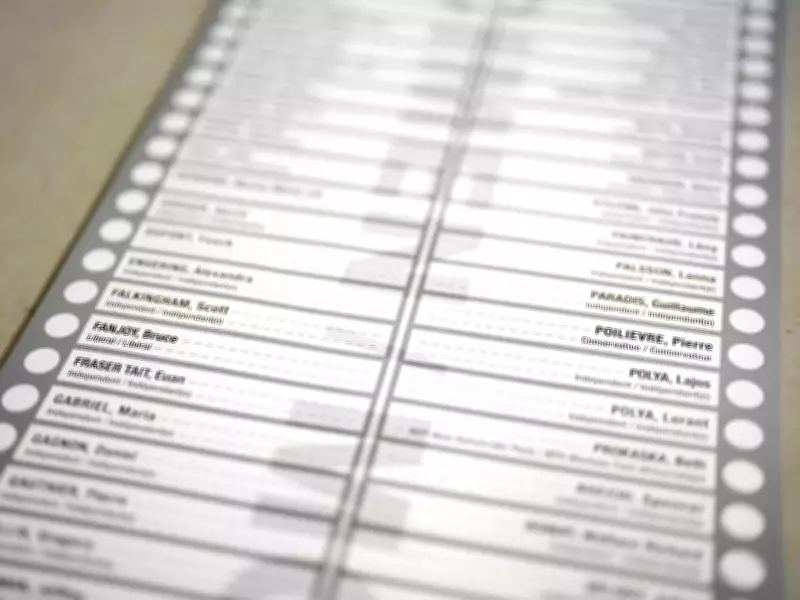
MPs Call for Election Reform to Address Longest Ballot Committee Tactics
A parliamentary committee investigating the impact of protest group the Longest Ballot Committee (LBC) in recent Canadian elections has issued a strong recommendation for legislative action. The multipartisan House of Commons committee on democratic procedures is urging Parliament to close nomination loopholes that have allowed the LBC to flood election ballots with paper candidates, creating confusion and undermining electoral integrity.
Proposed Revisions to the Elections Act
In a report released this week, MPs outlined specific revisions to the Elections Act designed to prevent frivolous candidates from appearing on ballots. Key recommendations include a prohibition on individuals signing more than one candidate's nomination papers per election cycle. More critically, the committee proposes an amendment to ban individuals from serving as the official agent for more than one candidate within a single electoral district.
The report emphasizes that allowing one person to represent multiple candidates in the same riding "seems to run contrary to the very nature of elections, which are competitive contests, with only one candidate declared the winner in every riding." It further argues that such arrangements place the official agent in "an apparent, if not real, conflict of interest."

LBC's Controversial Practices Under Scrutiny
The committee's investigation revealed that LBC member Tomas Szuchewycz has served as official agent for hundreds of protest candidates across eight federal election races since 2021. This includes more than 200 candidates in last summer's Battle River—Crowfoot, Alberta byelection alone.
The report also examined allegations that the LBC engaged in questionable nomination practices, including accusations that the group collected signatures on nomination forms where the candidate's name was intentionally left blank—a potential violation of election laws.
Szuchewycz vehemently denied these accusations in a statement, claiming committee members were "bamboozled" by deceptive editing from right-leaning YouTube channel Northern Perspective. He argued this demonstrates why MPs should not control their own election rules, suggesting they were "so eager to believe anything that would put the LBC in a bad light, they left their critical faculties at the door."
Widespread Complaints and Impact on Candidates
The committee documented approximately 18,000 complaints submitted to election officials regarding LBC activities during the April 2025 general election. Independent candidate Bonnie Critchley, who ran in the Battle River—Crowfoot byelection, estimates the LBC's tactics cost her "at least 20 per cent of the vote."
Critchley, who finished second to Conservative Leader Pierre Poilievre with just under 10 per cent of the vote, explained how the LBC hampered her ability to run a non-partisan, locally-focused campaign. Her name was lost among hundreds of gag candidates who also bore the "independent" label in printed candidate lists distributed to voters.
"Deputy returning officers at multiple polling stations were witnessed handing out a book of candidate names with those attached to parties listed at the front and independents listed at the back," Critchley noted, describing how legitimate independent candidates became indistinguishable from protest candidates.
Broader Implications for Democratic Processes
The committee's recommendations come amid growing concerns about electoral integrity and the potential for protest groups to exploit existing nomination rules. The proposed changes aim to restore competitive balance in elections while ensuring that candidates genuinely represent their constituencies rather than serving as vehicles for broader political statements.
As Parliament considers these recommendations, the debate highlights ongoing tensions between freedom of political expression and the need for orderly, transparent electoral processes that allow voters to make informed choices about legitimate candidates.