Montreal Diaspora Communities Anxious as Middle East Conflict Escalates
As war erupts across the Middle East, diaspora communities in Montreal are gripped by fear for loved ones caught in the crossfire. The conflict, which began with U.S.-Israeli strikes on Iran, has rapidly expanded into a regional crisis, leaving many local residents desperate for news from abroad.
Communication Cut Off Amid Growing Casualties
Sarah, an Iranian Montrealer who moved to the city in 2008 after living in France, told The Gazette she has been unable to reach family members in Iran. "We don't have news about family in Iran," said Sarah, whose full name was withheld for safety reasons. "We don't know what state they're in. Everything is cut off."
Tuesday marked the fourth day of hostilities that began when U.S.-Israeli strikes killed Iranian Supreme Leader Ayatollah Ali Khamenei. The conflict has since spread across the region, with Israel sending soldiers into southern Lebanon and carrying out strikes in Beirut, while Iran has fired missiles at several countries hosting U.S. bases.

Casualty reports continue to mount: Iran's Red Crescent has reported 787 dead since the war began last Saturday. Lebanon's health ministry says more than 50 people have died from Israeli attacks, while around a dozen have perished in Israel. The U.S. has confirmed six soldier fatalities.
Mixed Reactions Within Montreal's Iranian Community
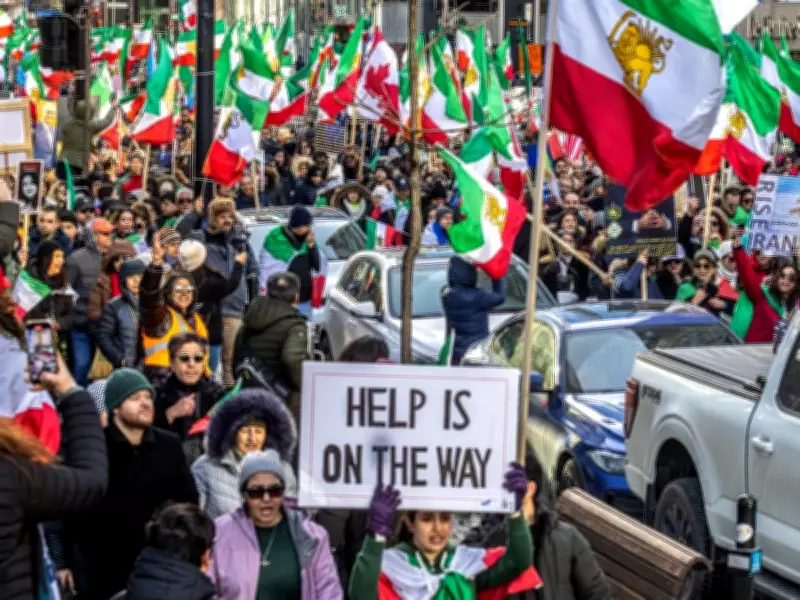
While some Iranian Montrealers initially celebrated the outbreak of war, hoping it might lead to regime change, others expressed deep concern about the human cost. Sarah, a member of the Association des femmes iraniennes de Montréal, acknowledged mixed feelings about Khamenei's death but emphasized her opposition to the broader conflict.
"Of course, like everyone, I'm happy that a dictator is gone from the world," she said. "But I'm very worried about the bombardment of Iran. I'm against war everywhere in the world."
Sarah, who was held as a political prisoner under both the current Islamic Republic and the previous Shah regime, expressed skepticism about potential leadership changes. She criticized those supporting Reza Pahlavi, son of the former Shah, as Iran's potential new leader, arguing that "power should be in the hands of people who suffered in Iran."
Lebanese Montrealers Experience Painful Déjà Vu
For Lebanese Montrealers, the conflict brings back traumatic memories of past wars. Caroline Codsi, who founded an organization promoting workplace equity and diversity, described experiencing "déjà vu" as war spread to Lebanon. Having fled and returned to Lebanon eight times during 15 years of civil war, Codsi now feels "guilty that your loved ones are going through this."
Codsi recently spoke with a cousin in Lebanon who called the civil war "a picnic in the park" compared to current threats. "When facing airstrikes as a kid, we were able to run into the basement and hide," Codsi explained. "Now, the arms are so heavy that one missile will collapse a 20-storey building in a nanosecond."
The escalation has forced Codsi's family to cancel plans for a summer reunion in Beirut, another disappointment in what she described as a pattern of disrupted homecomings. "I keep thinking, OK, this summer will be the right time to go back," she said. "And then something happens."
Jewish Community Expresses Security Concerns
Within Montreal's Jewish community, there is "a sense of anxiety and tension," according to Yair Szlak, president of Federation CJA. "Our concern is of course, as usual, the security situation in and around the Jewish community," he said, noting that "people throughout the Middle East are sitting in bomb shelters."
Szlak emphasized the broader human tragedy unfolding: "I think that is sad and I think the world needs to take note."
As the conflict continues to escalate, Montreal's diverse diaspora communities remain united in their concern for family and friends abroad, while grappling with complex emotions about political change and human suffering in their countries of origin.