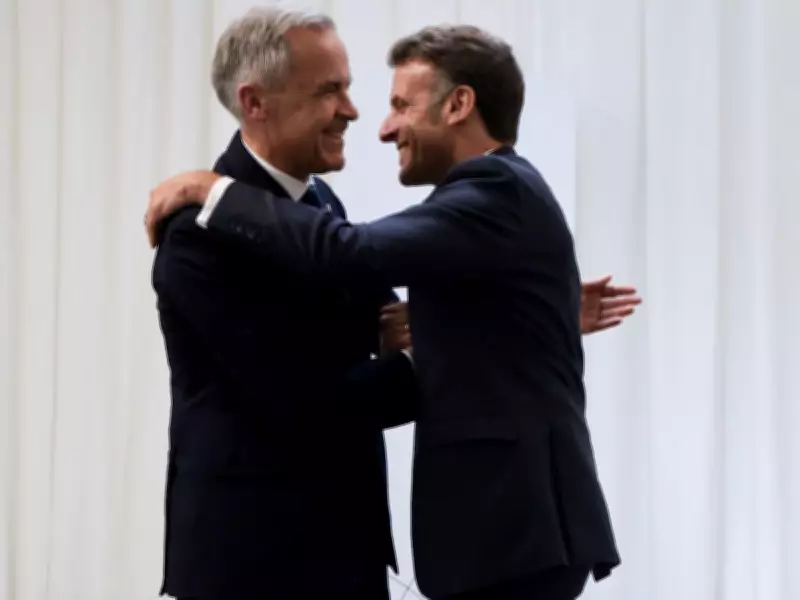
If it is Tuesday, this must be Belgium. For those old enough to recall the 1969 film about a whirlwind European tour, the sentiment may resonate with many Canadian Baby Boomers who likely voted Liberal in the last election. They might be pleased with the current direction, but perhaps surprised by Prime Minister Mark Carney's extensive time abroad across the Atlantic.
In his first six months in office, Carney has made five trips to Europe, covering 11 countries. In 2026 alone, he has visited the United Kingdom, France, Switzerland, and other nations. Last weekend, he addressed the European Political Community summit in Yerevan, Armenia—a first for a non-European leader. Additionally, Carney has been invited to speak before the European Parliament later this year. While Justin Trudeau also addressed the Parliament twice, the invitation for Carney carries a distinct significance.
Personal and Political Roots
Carney's pivot to Europe is not merely economic; it is deeply personal and political. Having served as Governor of the Bank of England and as the United Nations Special Envoy for Climate Finance, Carney has strong European ties. His first foreign trip as prime minister was to Europe, meeting French President Emmanuel Macron and British Prime Minister Keir Starmer. This choice underscored Canada's dual French-English heritage and sent a clear message to Washington that Canada has other allies.

Historical Attempts at Diversification
Canada has previously attempted to reduce reliance on the United States. In 1957, Prime Minister John Diefenbaker sought stronger economic links with Britain. In the 1970s, Prime Minister Pierre Elliott Trudeau advanced a “Third Option” strategy after the Nixon shocks imposed 10 per cent tariffs on Canadian goods. Neither effort succeeded. It was not until the 1980s that Prime Minister Brian Mulroney pursued deeper integration with the U.S., signing the first bilateral free trade deal in 1987, which boosted Canada's annual GDP by $1.1 trillion over 25 years.
Current Trade Landscape
Canada already has trade agreements with the European Union (EU) and the United Kingdom, signed in 2017 and 2021 respectively. As a result, 98 per cent of Canadian goods enter the EU tariff-free. Merchandise exports to the EU have increased by 57 per cent since 2015, reaching $34 billion. The UK is Canada's third largest trading partner, with trade valued at $61 billion in 2024.
Despite these successes, Carney has pushed for more. Since President Donald Trump took office, Carney has signed the New EU-Canada Strategic Partnership of the Future and a Security and Defense Partnership. Canada also became the first non-European country to join the EU’s Security Action for Europe (SAFE) initiative, boosting Canadian defence sales.
Prospects for EU Membership
The next logical step would be a formal application to join the EU. While not impossible—Turkey, not technically a European country, has applied—it is inadvisable. Membership would require adopting thousands of European laws and strict environmental and agricultural standards. Canada would have to apply EU tariffs on trading partners, including the U.S., and open its doors to the EU’s 450 million people as potential workers, migrants, and students—at a time when Canada is cutting immigration to address housing and employment shortages.