Congresswoman Luna's War Classification Sparks Heated Television Debate
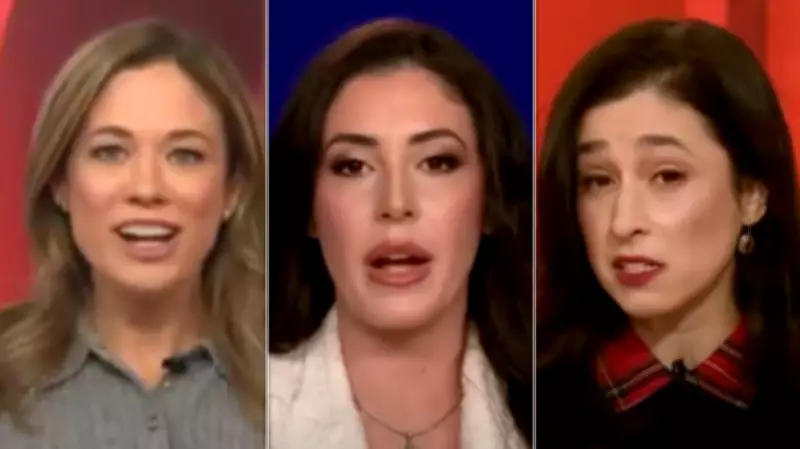
Republican Representative Anna Paulina Luna of Florida ignited a fiery exchange on national television this week, steadfastly refusing to label recent U.S. military actions against Iran as a war. The contentious discussion unfolded on MSNBC's "The Weekend Primetime," where Luna faced intense scrutiny from hosts Catherine Rampell, Elise Jordan, and Ayman Mohyeldin.
Luna's Insistence on 'Strategic Strikes' Terminology
Despite the escalating violence that has already claimed the life of Iran's Supreme Leader Ayatollah Ali Khamenei and resulted in four American service member fatalities, Luna maintained her position. "Strategic strikes are not war," she declared repeatedly, citing conversations with White House officials and Secretary of State Marco Rubio as her justification. This stance directly contradicted President Donald Trump's own characterization of the conflict as a war, a point emphasized by host Catherine Rampell.
Hosts Challenge Luna's Definition of War
The debate intensified when co-host Elise Jordan posed a pointed hypothetical: "So if someone bombed America, that wouldn't be a war?" Luna responded by questioning whether there were "boots on the ground," prompting Jordan to retort that this definition made no logical sense. Luna further argued that Iran had already declared war on the United States by causing thousands of American deaths, though she provided no specific evidence when pressed by Ayman Mohyeldin.

Constitutional and Strategic Concerns Raised
Beyond semantic disagreements, the hosts raised critical questions about the conflict's legitimacy and consequences. Jordan highlighted the unresolved issue of whether the situation meets the constitutional standard for committing military personnel to war without Congressional approval. Mohyeldin accused Luna of avoiding a "good faith conversation" and spreading misinformation, noting that the U.S. initiated the conflict and Iran's retaliation had directly led to American casualties.
The operation has drawn significant criticism for potentially stoking a wider regional conflict and entrenching the United States in a prolonged engagement. President Trump has warned of additional casualties, underscoring the grave human cost of the ongoing hostilities. This televised confrontation reflects deeper divisions within American politics regarding military intervention, executive authority, and the very definition of warfare in modern geopolitics.