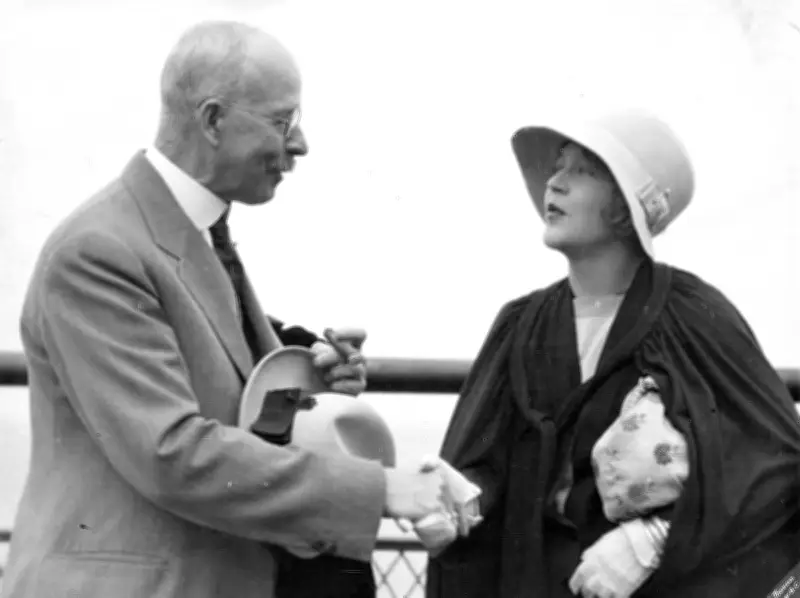
On June 4, 1946, Louis Denison Taylor, Vancouver's longest-serving mayor, passed away at St. Paul's Hospital at the age of 88. The Vancouver Sun lamented how the public had largely ignored the former mayor in his final years, describing him as "feeble, lonely and slightly embittered" as he "dragged out his days on the scene of many a forgotten triumph."
A Life of Triumph and Decline
Taylor was elected mayor a record eight times, serving a total of 11 years between 1910 and 1934. He was also a prominent newspaperman, owning and editing the Vancouver World from 1905 to 1915. The Sun noted that his death marked the end of "an era of robust and sometimes boisterous civic expansion," as he symbolized the spirit that transformed Vancouver from a shack town into a great metropolis.
Early Life and Arrival in Vancouver
Born on July 22, 1857, in Ann Arbor, Michigan, Taylor grew up poor but industrious. He became a partner in a small Chicago bank, but when it floundered, he left with creditors on his heels. He arrived in Vancouver by train on September 8, 1896, when the city was just 10 years old. After a brief return to the U.S., he came back for good in 1898 and thrived as circulation manager of the Daily Province.

The Vancouver World and Sun Tower
In 1905, Taylor and partners bought the Vancouver World for $65,000. He revitalized the paper with a bold logo, giant headlines, flashy stories, and numerous illustrations and photos. Its mottos were "The Paper That Prints The Facts" and "The People's Paper." During a pre-World War I boom, the World was flooded with ads and claimed to be the largest paper in western Canada. In 1910, Taylor announced plans for the World Tower, now known as the Sun Tower. However, the building was a financial bust, and he lost both the newspaper and the tower to creditors by 1915.
Political Career
A champion of the working class, Taylor often clashed with what he called "powerful interests." He first ran for mayor in 1909 but lost to incumbent C.S. Douglas. He defeated Douglas in 1910 and was re-elected in 1911. His final term ended in 1934. Despite his earlier successes, his later years were marked by loneliness and a sense of ingratitude from the city he had helped build.