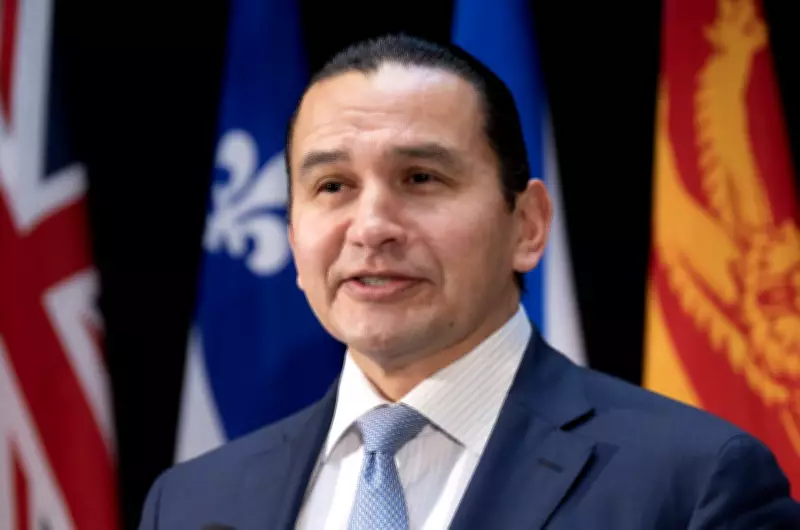
Manitoba Premier Wab Kinew has issued a bold ultimatum to the United States, stating that President Donald Trump must drop all tariffs and release the Epstein files before American alcoholic beverages can return to Manitoba store shelves. The announcement was made on April 24, 2026, as part of a broader discussion on trade relations and provincial economic strategy.
Conditions for Restoring U.S. Alcohol Imports
In a statement that has sparked widespread debate, Kinew emphasized that the current trade barriers imposed by the U.S. are unacceptable. He argued that the tariffs are harming Manitoba businesses and consumers, and that the release of the Epstein files is a matter of transparency and justice. Until these conditions are met, the ban on U.S. alcohol will remain in place.
Expanding Churchill Port for LNG Exports
Alongside the trade demands, Kinew outlined plans to expand the Port of Churchill to facilitate liquefied natural gas (LNG) exports by 2030. This move aims to boost Manitoba's economy and reduce reliance on U.S. trade routes. The port, located on Hudson Bay, is strategically positioned to serve global markets, particularly in Europe and Asia.

The premier's comments come amid ongoing tensions between Canada and the U.S. over trade policies. Kinew's stance reflects a growing sentiment among Canadian leaders to push back against what they see as unfair trade practices.
Critics have questioned the feasibility of linking the Epstein files to trade negotiations, but Kinew insists that the two issues are connected by a broader need for accountability and fairness. The Manitoba government is also exploring alternative sources for alcohol imports, including from other Canadian provinces and international markets.
The expansion of the Churchill port is expected to create jobs and stimulate economic growth in northern Manitoba. Environmental assessments and consultations with Indigenous communities are underway to ensure sustainable development.
Kinew's bold approach has drawn both praise and criticism, but he remains firm in his demands. As the situation unfolds, Manitoba's position could influence other provinces to take similar stances against U.S. trade policies.