Kim Jong Un Secures Another Term as North Korea's Supreme Leader
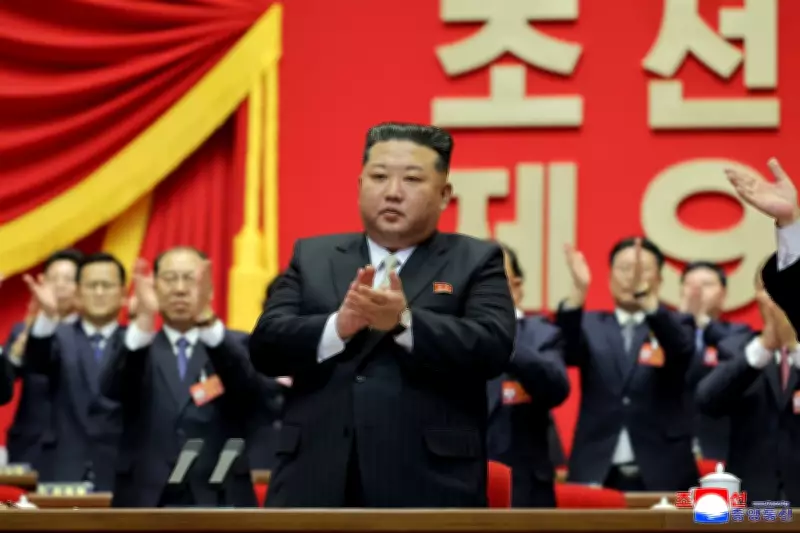
In a move that solidifies his unchallenged authority, North Korean leader Kim Jong Un has been re-elected to the highest position within the country's ruling Workers' Party. The decision was announced during the party's congress held in the capital city of Pyongyang on Sunday, February 22, 2026. State media, specifically the Korean Central News Agency (KCNA), released photographs depicting Kim at the event, where he was seen applauding alongside other party officials.
State Media Celebrates Nuclear Advancements
The official narrative from North Korea heavily emphasized the nation's nuclear weapons buildup as a monumental success under Kim's leadership. KCNA reports praised the advancements in the country's military capabilities, framing them as essential for national security and sovereignty. This re-election comes at a time when North Korea continues to prioritize its nuclear program, despite international sanctions and diplomatic pressures.
It is important to note that independent journalists were not granted access to cover the congress. The images and information disseminated were provided exclusively by the North Korean government, and their content cannot be independently verified. The photographs distributed featured a Korean language watermark reading "KCNA," identifying their source as the state-run news agency.

Consolidation of Power in a Closed Regime
This re-election underscores the tight control Kim Jong Un maintains over North Korea's political apparatus. The Workers' Party congress serves as a key platform for reaffirming his leadership and outlining future policies, which historically have focused on military strength and self-reliance. Analysts observe that such events are meticulously staged to project unity and unwavering support for the supreme leader.
The lack of external media presence highlights the opaque nature of North Korea's political processes. Without independent verification, the full context and proceedings of the congress remain largely inaccessible to the outside world, relying solely on state-controlled narratives.
As Kim Jong Un continues his tenure, the international community watches closely, particularly regarding the implications for regional stability and global non-proliferation efforts. The reaffirmation of his leadership suggests a continuation of current policies, with nuclear capabilities remaining a cornerstone of North Korea's strategic posture.