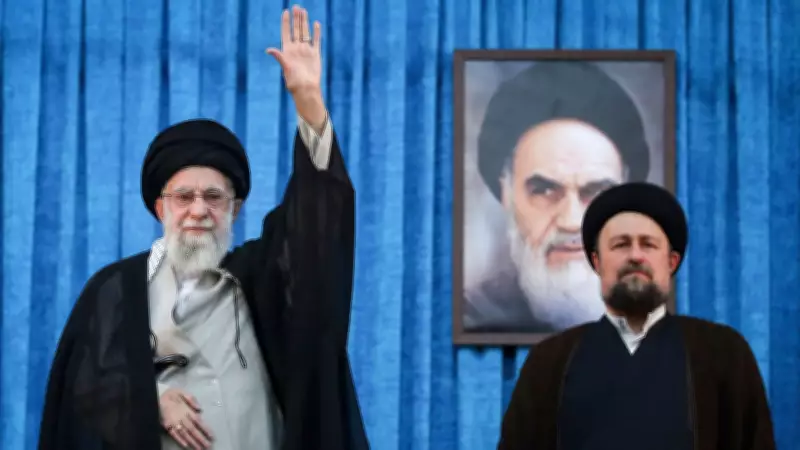
Khomeini's Grandson Emerges as Potential Successor to Iran's Supreme Leader
The grandson of Ayatollah Ruhollah Khomeini, the late founder of the Islamic Republic of Iran, is increasingly viewed as a significant figure in the deliberations to replace the recently deceased Supreme Leader Ayatollah Ali Khamenei. The unexpected death of Khamenei, aged 86, in a reported U.S.-Israeli military strike has accelerated discussions about his successor, a topic that had remained unresolved despite his advanced age.
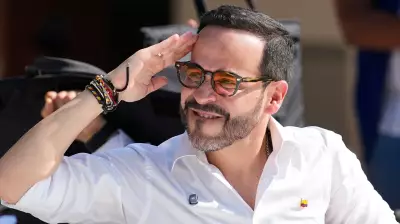
Profile of Hassan Khomeini
Hassan Khomeini, 53, stands out as the most prominent among the late Ayatollah's 15 grandchildren. He is perceived as a relative moderate within Iran's clerical establishment and maintains strong connections with reformist figures, including former presidents Mohammed Khatami and Hassan Rouhani. Both former leaders advocated for policies of engagement with Western nations during their administrations.
Khomeini holds a symbolically vital public role as the custodian of his grandfather's mausoleum in southern Tehran. Notably, he has never held a government position, which some analysts suggest enhances his appeal as an untainted candidate.

Political Dynamics and Rivalries
Within Iran's political landscape, Hassan Khomeini is seen by some as a counterbalance to hardliners who consolidated power under Khamenei's leadership, particularly Mojtaba Khamenei, the late leader's son. The argument for appointing a moderate successor has gained traction among certain Iranian politicians following widespread unrest in January, viewed as a strategy to stabilize the Islamic Republic amid growing dissent.
Despite his loyalty to the system established after the 1979 revolution, Khomeini has a documented history of advocating for reform and occasionally expressing dissent against authorities. In 2021, he publicly criticized the Guardian Council after it excluded reformist candidates from presidential elections, a move that facilitated the election of hardliner Ebrahim Raisi, who later died in a 2024 helicopter crash.
Public Statements and Controversies
Khomeini demanded accountability following the 2022 death of Mahsa Amini, a young woman who died after being detained by morality police for allegedly violating dress codes, an incident that sparked nationwide protests. He called for transparent explanations from authorities regarding her death.
However, during the severe unrest in December and January—the deadliest since the revolution—Khomeini aligned with the establishment, accusing rioters of serving foreign interests and participating in pro-government demonstrations. He described some violent acts as reminiscent of Islamic State tactics.
In a condolence message, he praised Khamenei as a perpetual hero for Iranians and Muslims, urging the nation to overcome the crisis by following his grandfather's path.
Personal Background and Views
A close associate described Khomeini in 2015 as a progressive theologian with liberal views on music, women's rights, and social freedoms. He is active on social media and engages with both Western philosophy and Islamic thought. Fluent in Arabic and English, he was an avid footballer until age 21, when his grandfather directed him to study Islamic theology in Qom.
Khomeini is married to Sayyeda Fatima, daughter of an Ayatollah, and they have four children. He supported the Rouhani administration that negotiated the 2015 nuclear deal, which was later abandoned by the U.S. under President Donald Trump. He has also spoken openly about the economic challenges Iranians face due to sanctions.
Political Ambitions and Obstacles
Reformists encouraged Khomeini to run for president in 2012, but he declined. A decade ago, he attempted to join the Assembly of Experts, the body responsible for selecting the Supreme Leader. Initially receiving approval from Khamenei, he was later disqualified by the Guardian Council, citing his clerical rank of Hojatoleslam, one level below Ayatollah. Many interpreted this as an effort to prevent a reformist challenge.

In 2008, he indirectly criticized the Islamic Revolutionary Guards Corps (IRGC) by referencing his grandfather's directive that the military avoid politics, yet he maintains close ties with the elite force. During recent conflicts with Israel, Khomeini commended Khamenei's leadership and praised Iranian missile capabilities, while condemning Israel as a "cancerous tumor" backed by the West.
As Iran navigates this critical transition, Hassan Khomeini's blend of reformist leanings and revolutionary lineage positions him as a pivotal, albeit contested, figure in the succession debate.