Less than two months after Tk'emlúps te Secwépemc announced on May 27, 2021, that they had uncovered the 'remains of 215 children' at the former Kamloops Indian Residential School, they held a press conference admitting the number was incorrect.
At the time, flags across Canada were half-masted until November, and news outlets worldwide reported that Canada had discovered a field of dead missing children. The figure '215' appeared on countless memorials and solidarity statements, and was spray-painted on statues during vandalism attacks on Christian churches, including the toppling of a Toronto statue of Egerton Ryerson.
Just a week before the press conference, Chief Rosanne Casimir had introduced resolutions at the Assembly of First Nations calling the discovery a 'mass grave' and evidence of 'genocide inflicted upon Indigenous Peoples by the State in partnership with the churches.' However, on July 15, 2021, media were told there were actually 15 fewer suspected graves than initially reported.

Ground-Penetrating Radar Errors
Sarah Beaulieu, the ground-penetrating radar technician whose report yielded the initial 215 figure, stated she had since learned that her survey had accidentally counted prior archaeological digs. Between 1991 and 2004, a Simon Fraser University team had excavated the land surrounding the school, digging 'shovel test pits' and screening soil for bone tools and fire pits. Some of these test pits had been incorrectly identified as suspected graves.
'I had to rule out where those excavations had taken place in the late 90s, early 2000s,' said Beaulieu. 'After this review it was determined that there remain 200 targets of interest.'
Septic System Overlooked
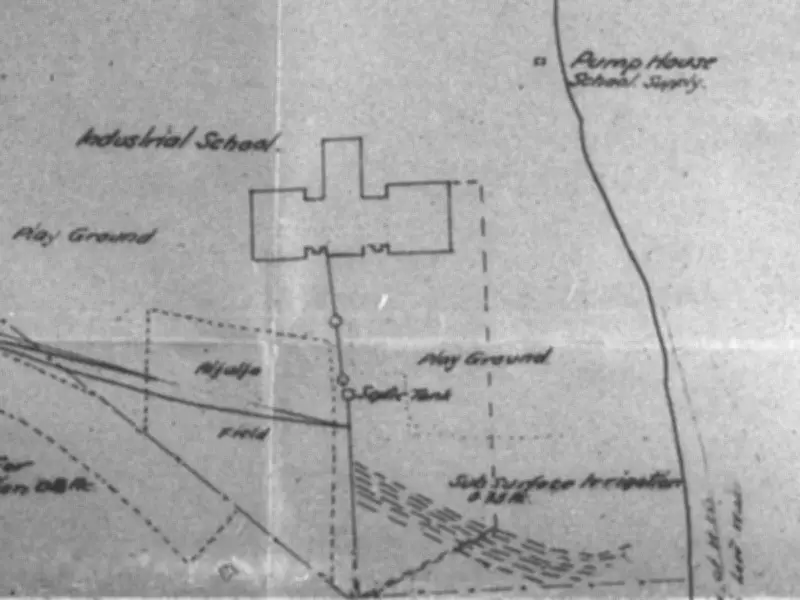
Unmentioned at the two-hour press conference was the arguably more relevant information that the surveyed area lay atop a historic septic system. The site may have been over the system's 'disposal beds,' a latticework of clay pipes installed in 1926 and laid out in an east-west orientation. The plans, purchase order, and correspondence for the septic field are all held in the archives of the National Centre for Truth and Reconciliation.
A 30-page engineer's report details the precise depth at which the tiles were installed. 'The original intention was to lay this land tile at a depth of 18 (inches) only below the surface to provide better aeration of the soil, but the nature of the ground was found after excavation had been commenced to be such that a greater depth was considered necessary,' wrote project engineer E.H. Tredcroft.
Five years after the explosive announcement, the only way to know what lies beneath the ground is to excavate. The lingering uncertainty underscores the need for physical verification rather than reliance solely on ground-penetrating radar.