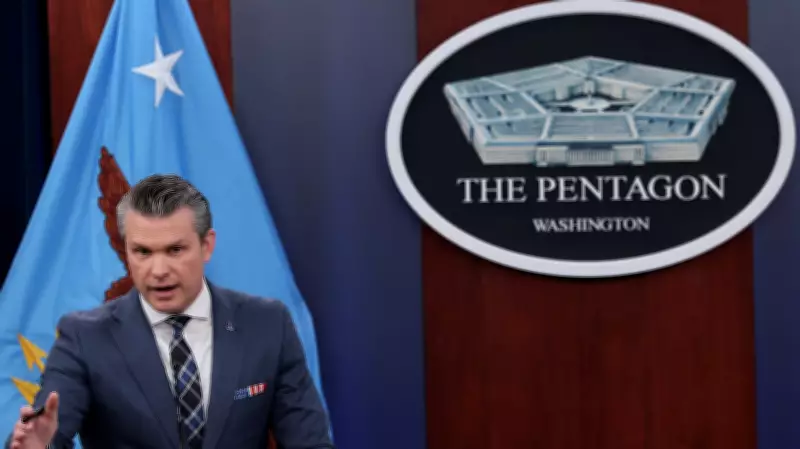
A federal judge intervened on Friday to block a contentious Pentagon press access policy implemented under the Trump administration, which had threatened journalists with being branded security risks if they pursued information not officially authorized for release. This ruling comes in response to a lawsuit filed by the New York Times in the Washington D.C. federal court, challenging the constitutionality of the Defense Department's recent changes.
Legal Challenge and Constitutional Concerns
The lawsuit argued that policy adjustments introduced in October 2025, under Defense Secretary Pete Hegseth, granted the Pentagon excessive authority to exclude reporters and news outlets based on coverage it disapproved of, thereby infringing on First Amendment protections for free speech and due process. Specifically, the policy stated that journalists could be deemed security risks and have their press badges revoked if they solicited military personnel to disclose classified or, in some instances, unclassified information without authorization.
Impact on Press Corps and Allegations of Bias
According to the Times' legal filing, only one out of 56 news outlets in the Pentagon Press Association agreed to sign an acknowledgment of the new policy, leading many reporters to surrender their press passes. In the aftermath, the Pentagon assembled a new press corps predominantly consisting of pro-Trump outlets and media personalities, which the Times cited as evidence that the policy aimed to suppress unfavorable coverage. The policy acknowledged that publishing sensitive information is generally protected by the First Amendment but asserted that soliciting such information could be considered in security risk assessments.

Government Defense and Broader Context
Justice Department lawyers defended the policy, acknowledging its subjective elements but maintaining that press credentialing decisions were still based on neutral, objective criteria. They argued that soliciting military personnel to commit crimes by disclosing unauthorized information does not constitute legally protected speech. This policy change has drawn sharp criticism from journalism advocates, who view it as part of a broader pattern of attacks on the free press by Trump and his administration.
In a related development, the Associated Press has a pending lawsuit against Trump administration officials over its removal from the White House press corps, stemming from a dispute over the naming of the Gulf of Mexico. The AP alleges illegal viewpoint-based discrimination, while the government claims discretion over press access in non-public spaces. This ruling underscores ongoing tensions between press freedoms and national security concerns in the current political landscape.