Uncertainty continues to linger over a ceasefire deal between Israel and Lebanon on Friday as the Israeli military continued its strikes on its neighbour to the north. Iran had insisted that fighting between Israel and Iran-backed Hezbollah in Lebanon must end as a condition for its own peace deal with the United States.
Israeli Strikes and Civilian Warnings
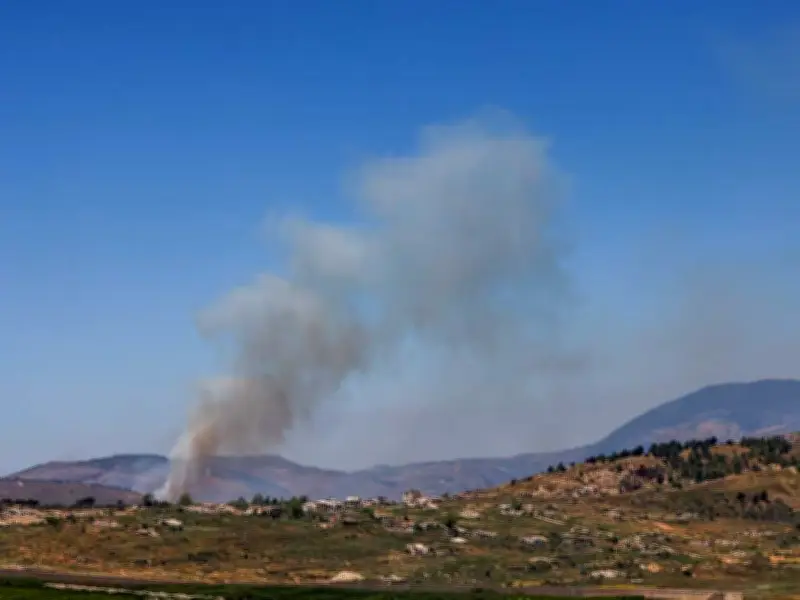
On Friday, four people were killed in Israeli strikes in the towns of Nabatiyeh and Bint Jbeil in southern Lebanon, CNN reported, citing Lebanese state-run news agency National News Agency. Before the strikes, the Israeli military had warned residents of six towns and villages, including south Lebanon’s Sarafand, to evacuate immediately, AFP reported.
“In light of the terrorist Hezbollah’s violation of the ceasefire agreement and its targeting of Israel’s home front, the Israel Defense Forces are compelled to act against it forcefully, especially in your areas,” the Israeli military’s Arabic-language spokesman Avichay Adraee posted on X, telling residents in the affected areas that the IDF “do not intend to harm you.”

Residents of three villages north of the Litani River in southern Lebanon were also warned to leave their homes. Lebanon’s National News Agency reported “mass displacement” from the three villages named in the warning.
Hezbollah Rejects Truce
A day earlier, Hezbollah rejected the truce announced by Lebanese and Israeli envoys in Washington. Hezbollah chief Naim Qassem had demanded a comprehensive ceasefire and full Israeli withdrawal from southern Lebanon.
Lebanese President Lashes Out at Tehran
In an exclusive interview with CNN on Friday, Lebanese President Joseph Aoun spoke out against Iran, slamming Tehran for using his country as a “bargaining chip” in its conflict with the U.S. and Israel. Speaking to veteran journalist Christiane Amanpour, Aoun said the Lebanese people near the border are “fed up” with war between Israel and Hezbollah. Addressing Israel, Aoun said, “Military solutions will never provide you with security and safety to the northern people.” Though the Iran-backed Hezbollah militant group operates within the country, the Lebanese government has declared Hezbollah’s military activities illegal, with its army working to disarm the group in areas south of the Litani River near Israel.
Hezbollah Admits 20 Attacks on Israeli Troops
Citing a Telegram channel associated with Hezbollah, CBS News reported that the Iran-backed militant group said it carried out around 20 attacks on Israeli troops in southern Lebanon on Friday. The attacks were reportedly in response to what Hezbollah claimed were Israeli ceasefire violations and previous strikes on Lebanese villages that resulted in civilian casualties.
War Pushing Millions into Hunger Crisis: UN
A new United Nations World Food Programme report said its dire prediction that a drawn-out Middle East war could push tens of millions more people into acute hunger is happening now “in real time.” Back in March, the WFP warned that soaring oil prices were devastating global food security, possibly affecting 45 million people. With the Strait of Hormuz — a critical oil shipping route — still effectively closed three months into the war, the director of WFP’s food and nutrition analysis service told AFP that “the negative scenario is unfortunately materializing.” The WFP’s Jean-Martin Bauer said millions of people are struggling to meet basic food needs due to rising costs of staples like rice and wheat.
The new WFP report analyzed the situations in several countries with different levels of exposure to the crisis, including Somalia, where six million people are currently considered acutely food insecure. It projected that 2.5 million Somalians would be unable to afford basic foodstuffs by the end of the year. And nearly 60% of households in the unstable Horn of Africa nation would be unable to afford essential needs, up from 47% in 2025, the WFP report said.