Iranians Display Complex Emotions Following Supreme Leader's Death
The streets of Tehran presented a stark contrast of emotions on Sunday as Iranians reacted to the death of Supreme Leader Ayatollah Ali Khamenei, who was killed during Israeli and U.S. strikes that extended into their second day. While some citizens openly celebrated the news, others plunged into deep mourning, creating a divided atmosphere across the capital and other major cities.
Contrasting Public Reactions Across Tehran
Initial reports of Khamenei's death prompted spontaneous celebrations in some parts of Tehran, with residents cheering from apartment buildings, blaring car horns, and playing music in the streets. "We are on the road and celebrating the news," said a woman in her 40s who had left the capital as strikes continued to pound the city.
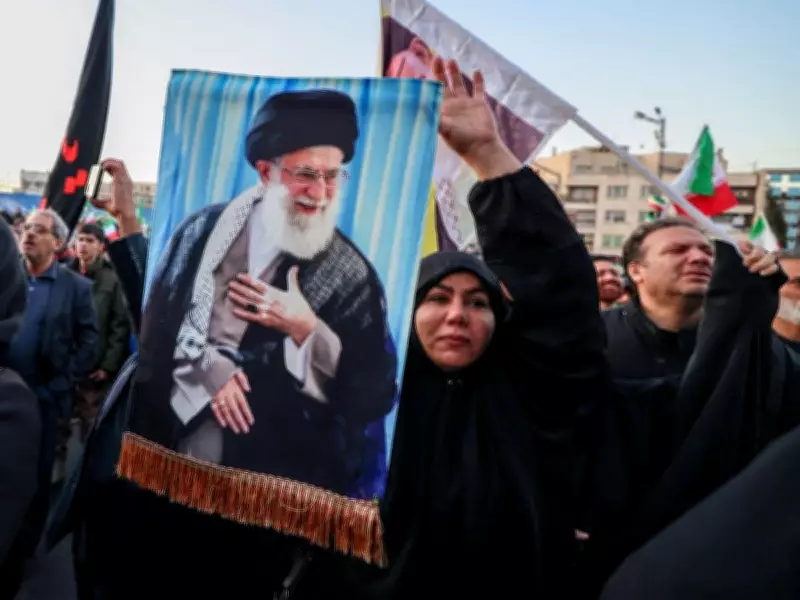
Meanwhile, in central Enghelab Square, mourners dressed in black gathered to honor the leader who had held ultimate authority over Iranian state matters for nearly four decades. The grieving crowds chanted "Death to America" and "Death to Israel" while carrying portraits of Khamenei, religious banners, and Iranian flags. Similar gatherings were reported in Shiraz, Yazd, Isfahan, Tabriz, and other cities according to state television broadcasts.

Official Announcement and National Response
Iranian state television announced Khamenei's death around 5:00 am on Sunday, stating that he had "fulfilled his lifelong dream" of martyrdom. The government immediately declared a 40-day mourning period with seven days of public holidays, during which large areas of normally busy Tehran remained deserted with shops shuttered.
Security measures intensified across the capital, with checkpoints established and police patrols appearing more numerous than during last year's 12-day war. At the northern Islam Qala border crossing, journalists observed the Iranian flag completely lowered and replaced with a black flag, though the crossing remained open with normal traffic flow.
Citizen Concerns and Anonymity
Reflecting the cautious atmosphere in Iran regarding political expression, none of the individuals interviewed by AFP were willing to provide their full names. A Tehran resident in his 30s expressed shock, saying "I cannot believe what happened," while others remained stunned into silence.
An Iranian cargo driver who requested anonymity for security reasons voiced deep concerns about the future, telling AFP: "The situation right now in our country is not good at all. I don't know what will happen in the future, but it's not a good future for us Iranians." The driver accused Americans of wanting to take over Iran's energy and mineral resources, claiming "The Americans have destroyed everywhere they've gone in the world."
Broader Context and Regional Implications
The attacks that killed Khamenei and top military leaders on Saturday prompted immediate retaliation from Iranian authorities, who launched strikes on Israel and across the Gulf region. This escalation comes amid ongoing regional tensions that have persisted for years, with Khamenei's nearly four-decade rule representing a significant era in modern Iranian history.
As dawn broke over Tehran on Sunday, the contrasting scenes of celebration and mourning highlighted the complex political landscape facing Iran following the loss of its supreme leader. The nation now enters an extended period of official mourning while grappling with uncertainty about leadership succession and future political direction.