Iran announced on Tuesday that negotiations with the United States regarding its nuclear program and the lifting of sanctions are expected to commence later this week. This development comes as U.S. President Donald Trump stated that the Strait of Hormuz would be "completely open" once the two nations finalize their agreement.
Negotiation Timeline and Details
Officials have indicated that talks for a final deal will occur within a 60-day window following the physical signing of a memorandum of understanding, which aims to end nearly four months of conflict triggered by U.S.-Israeli strikes on Iran.
Iranian Foreign Minister Abbas Araghchi confirmed, "Likely on Friday, at a location to be determined, a new round of negotiations between Iran and the United States to reach a final agreement will begin." He added that the final agreement will address nuclear issues and the lifting of sanctions.

Iran's deputy foreign minister, Mohammad Bagher Ghalibaf, will serve as the top negotiator and is expected to attend the signing in Switzerland. The U.S. delegation will be led by Vice President JD Vance, who mentioned that Trump himself might also participate.
Strait of Hormuz and Economic Impact
Trump stated that an Iranian blockade on the crucial Strait of Hormuz oil and gas route would be fully lifted on the same day the deal is signed, providing a major boost to the global economy. The U.S. had previously imposed its own blockade on Iranian ports in retaliation.
"Ships are starting to move, many loaded up with Oil, out of the Strait of Hormuz," Trump said on Monday, expressing confidence that the waterway would remain open without significant assistance.
Path to Agreement
Sporadic violence since an April ceasefire had threatened progress, but weeks of indirect negotiations mediated by Pakistan and Qatar built momentum for an interim agreement. However, a comprehensive resolution on Iran's nuclear ambitions and Western sanctions remains unresolved.
Washington and its close ally Israel are pressing for Iran to relinquish its stockpile of highly enriched uranium, reportedly buried during U.S. strikes last year. Iran, conversely, insists on its right to enrich uranium. The agreed framework has paved the way for talks on these key disputes.
Reactions and Perspectives
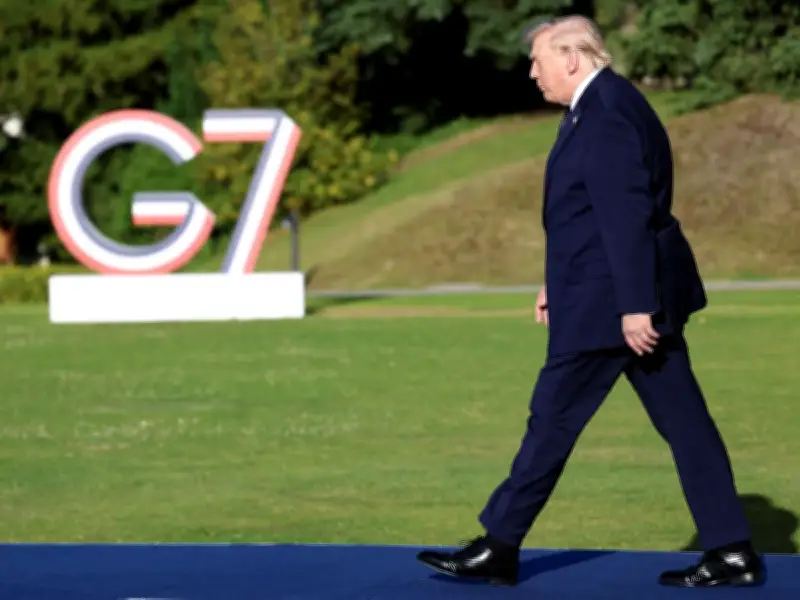
When asked at the G7 summit in France about the release of the agreement text, Trump described it as "a very powerful document" and indicated it would be released soon. He also revealed that the U.S. is still negotiating whether Iran will suspend enrichment for 20 years, hinting he might settle for 15.
Iran's military hailed the accord as a victory, claiming it had "humiliated" the U.S. and Israel. President Masoud Pezeshkian called it "a great achievement" for the region. The ultraconservative newspaper Vatan-e Emrooz praised the agreement as a "Trump surrender document." However, Araghchi struck a more cautious note, stating, "We have a history of broken commitments ... we have a history of agreements being torn up. All of this is present in our minds."