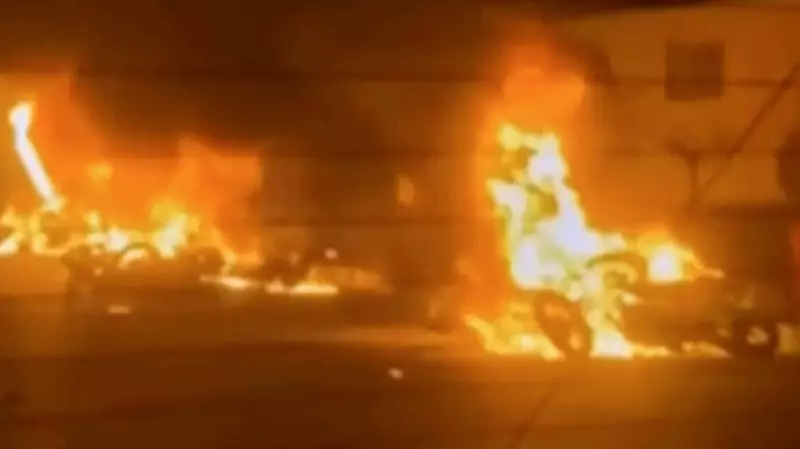
Nationwide protests in Iran have persisted for two full weeks, marking a sustained challenge to the country's theocratic government. According to activist reports, the death toll has climbed to at least 116 individuals, with more than 2,600 people detained amid the escalating violence.
Information Blackout and Escalating Violence
As the Iranian government maintains a near-total shutdown of the internet and restricts phone lines, verifying events from outside the country has become increasingly difficult. The U.S.-based Human Rights Activists News Agency, which has a track record of accuracy during past unrest, provided the latest casualty and detention figures. In contrast, Iranian state television has focused its reporting on casualties among security forces, asserting control while increasingly labeling demonstrators as "terrorists."
Despite the narrative of control, state media acknowledged that protests continued into Sunday morning in the capital, Tehran, and the holy city of Mashhad. The government's rhetoric has hardened significantly. Iran's attorney general, Mohammad Movahedi Azad, issued a stark warning on Saturday, stating that anyone participating in protests could be deemed an "enemy of God," a charge that carries the death penalty. The warning extended even to those accused of assisting protesters.

International Reactions and Military Posturing
The international community is watching closely as the crisis deepens. U.S. President Donald Trump voiced support for the protesters on social media, declaring, "Iran is looking at FREEDOM, perhaps like never before. The USA stands ready to help!!!" Reports from major U.S. newspapers, citing anonymous officials, indicated that President Trump had been presented with military options for a potential strike on Iran, though no final decision had been made.
The U.S. State Department issued a separate, pointed warning: "Do not play games with President Trump. When he says he'll do something, he means it." This comes as Supreme Leader Ayatollah Ali Khamenei has signaled an impending harsh government crackdown, seemingly undeterred by international pressure.
On-the-Ground Reports and Symbolic Acts
Within Iran, state television has employed powerful imagery, repeatedly airing a martial orchestral piece known as the "Epic of Khorramshahr" alongside footage of pro-government rallies. This song, which honors a key victory in the Iran-Iraq war, has also been used in videos of women cutting their hair to protest the 2022 death of Mahsa Amini, symbolizing the deep roots of the current unrest.
Verified videos from the past week show significant demonstrations, including one in northern Tehran where a crowd chanted "Death to Khamenei!" Iranian media, closely linked to the powerful Revolutionary Guard, have reported casualties among security forces, including members of the Basij militia, and claimed the arrest of nearly 200 people from what they described as "operational terrorist teams."
The protests, which began on December 28 over the collapse of the Iranian rial and a crippled economy, have evolved into a direct challenge to the Islamic Republic's foundation. Exiled Crown Prince Reza Pahlavi has called for continued demonstrations, urging the use of pre-revolutionary national symbols, though his alignment with Israel remains controversial for many Iranians.
The situation has practical international ramifications, with several airlines, including Austrian and Turkish Airlines, canceling flights to Iran. Human rights advocates express grave concern that the information blackout could enable a bloody crackdown by security forces, reminiscent of the hundreds killed during the 2019 protests, leaving the world to fear the worst as the standoff continues.