Idlout's Defection Shifts Parliamentary Math as Liberals Eye Majority
In a significant political realignment, NDP Member of Parliament for Nunavut, Lori Idlout, has crossed the floor to join the governing Liberal Party. This move, confirmed on March 11, 2026, brings Prime Minister Mark Carney's government to within just two seats of securing a majority in the House of Commons. The timing is critical, with several impending byelections poised to further influence the balance of power.
A Strategic Move Amidst Political Uncertainty
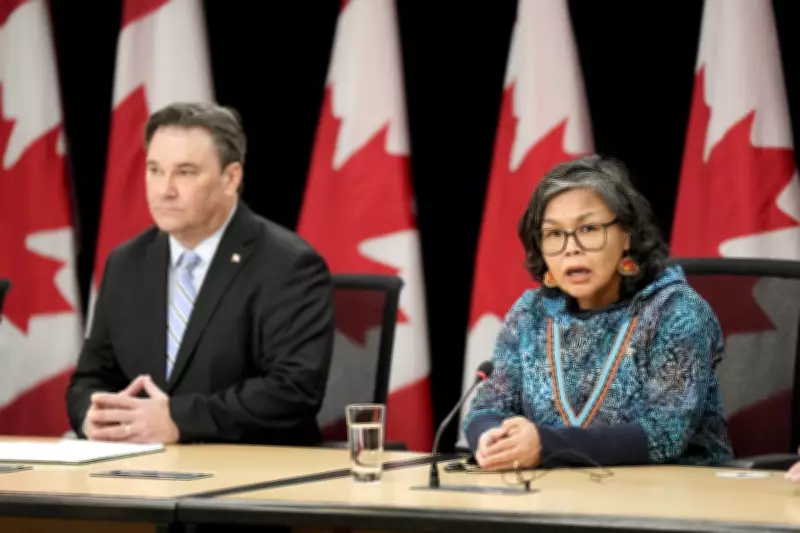
Idlout, who has served as the MP for Nunavut since her election, was seen alongside NDP Leader Don Davies at a media event in Ottawa earlier this year. Her decision to switch allegiances underscores the fluid nature of Canadian politics and the high stakes as parties jockey for position. The Liberals, under Carney's leadership, have been actively working to consolidate support, and Idlout's addition provides a tangible boost to their parliamentary numbers.
The floor crossing reduces the NDP's seat count while incrementally strengthening the Liberal caucus. With the government now only two seats shy of a majority, every vote becomes increasingly consequential, especially on contentious legislation and confidence matters. This development occurs against a backdrop of ongoing political maneuvers, including recent comments from former U.S. President Donald Trump, who referred to Carney as the "future Governor of Canada," a moniker he has used previously, highlighting the international attention on Canada's political dynamics.

Implications for Upcoming Byelections
The proximity to a majority government sets the stage for heightened activity in the forthcoming byelections. These contests, which will fill vacancies in various ridings, could potentially tip the scales, granting Carney the majority he seeks or, conversely, reinforcing the opposition's position. Political analysts suggest that Idlout's move may influence voter perceptions and party strategies in these races, as both the Liberals and their rivals adjust their messaging to capitalize on the shifting landscape.
Byelections often serve as a barometer of public sentiment, and with the government so close to majority status, turnout and results will be closely scrutinized. The NDP, now facing the loss of a sitting MP, may need to reassess its outreach and policy priorities to retain support in key regions. Meanwhile, the Liberals are likely to emphasize stability and governance, leveraging Idlout's defection as evidence of growing confidence in their agenda.
Broader Political Context and Reactions
Floor crossings, while not uncommon in Canadian politics, rarely occur without controversy. Idlout's decision has sparked discussions about party loyalty, representation, and the interests of her Nunavut constituents. Some observers argue that such moves can enhance an MP's ability to advocate for their riding from within the governing party, while others caution about potential disillusionment among voters who supported a different party platform.
In related political news, the Conservative Party has been advocating for the removal of interprovincial barriers to alcohol shipping, a policy area that may see movement as the government seeks to build consensus. Additionally, issues like data breaches, as seen in Loblaw's recent investigation, and technological policies, such as Ottawa's decision to drop a proposed TikTok ban, continue to shape the political discourse, intersecting with the broader implications of Idlout's floor crossing.
As the situation evolves, all eyes will be on the House of Commons and the upcoming byelections. Prime Minister Carney's government, now bolstered by Idlout's support, faces both opportunity and challenge in navigating the path to a potential majority, with every parliamentary session and electoral contest carrying increased weight in determining Canada's political future.