Hungary's Sunday Election Poised to Topple Putin's Trojan Horse in the EU
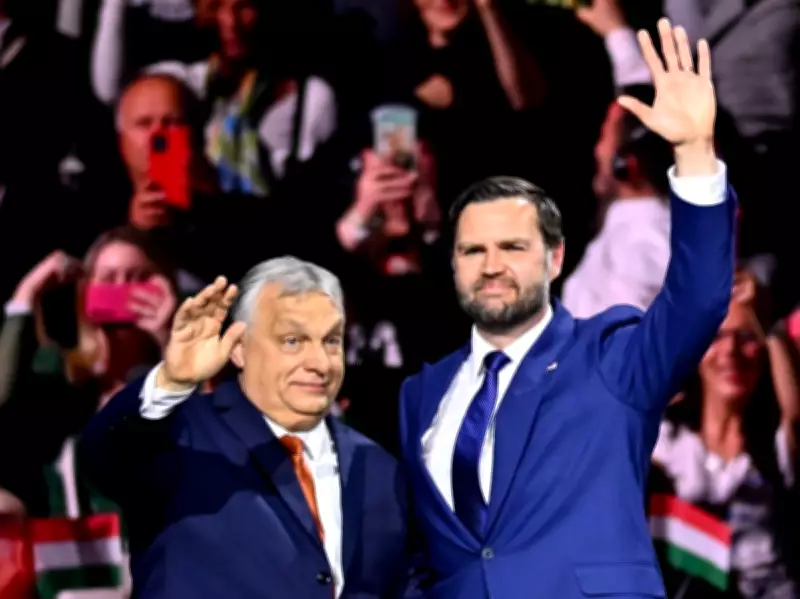
Longstanding Hungarian Prime Minister Viktor Orbán, who transformed his nation into a pro-Russian kleptocracy, is widely anticipated to be removed from power during this weekend's parliamentary election. His potential ouster would deliver a significant blow against global authoritarianism, yet both Moscow and Washington, in a strange and perverse alliance, appear interested in maintaining his position.
From Marginal Player to Global Influencer
A generation ago, few would have imagined that Hungary—a central European country with just under 10 million citizens—would assume such an outsized role in international politics. However, Orbán's political maneuvering has turned the nation into a beacon of conservative populism and an indispensable asset in Russia's campaign to influence both Europe and the United States.
After seizing power in 2010, Orbán systematically subordinated state institutions to his will, conspired with loyal oligarchs to capture most of the national media, and amended Hungary's constitution to emphasize Christianity and traditional values. What began as a staunchly anti-Russian position evolved into an ideological and political alliance with Russian President Vladimir Putin, as both leaders recognized they could govern as de facto dictators while enriching themselves at their citizens' expense, all while performing the defense of faith and family.

The Refugee Crisis and Orbán's Rise to Prominence
Hungary's global relevance remained marginal during Orbán's early rule. European leaders expressed annoyance with his corruption and burgeoning authoritarianism but tolerated his behavior because Hungary, as an EU member, provided access to cheap labor. The international community largely viewed the country as a case study in democratic backsliding.
This changed dramatically in 2015 when the European Union insisted that member states quickly absorb over one million Middle Eastern refugees, most of whom were young men. Orbán defiantly refused Brussels' demands, labeling these migrants "Muslim invaders" in a 2018 interview. This stance bolstered his domestic support and transformed him into a darling of the populist right across Europe.
The continent-wide refugee crisis spurred a surge in the European far right, as mainstream political parties failed to address legitimate concerns about mass migration. The far right subsequently looked to Hungary as an example of effective governance, while ideologically ignoring the country's underperforming economy, hollowed-out institutions, and paralyzing cronyism.
Orbán as Putin's Trojan Horse
Meanwhile, Orbán utilized state funds to establish a constellation of conservative think tanks that, in addition to becoming hubs of MAGA and nationalist ideology, laundered Kremlin talking points for Western intellectuals who might otherwise have avoided direct association with Russia.
Following Russia's full-scale invasion of Ukraine, Orbán became Putin's Trojan horse within Europe. Since the European Union requires unanimity for foreign policy and financial decisions, Hungary—possessing veto power like any other member—consistently undermined sanctions against Russia while delaying, diluting, and blocking aid packages to Ukraine. Without Orbán's obstructionism, Kyiv's wartime position would have been substantially stronger.
The Unusual Alliance Against Change
Remarkably, both Moscow and Washington appear invested in maintaining Orbán's rule, creating a perverse alliance of convenience. For Russia, Orbán represents a crucial wedge within the European Union, while certain elements in Washington view him as a valuable conservative ally despite his authoritarian tendencies.
This Sunday's election represents a pivotal moment not just for Hungary but for the entire European project. The potential removal of Viktor Orbán would eliminate one of Putin's most effective tools for dividing the West and weakening support for Ukraine. As Hungarians prepare to vote, the world watches to see whether this central European nation will reclaim its democratic foundations or continue down the path of illiberal governance.