A group of House Democrats introduced a bill on Tuesday that would increase the federal minimum wage to $25 per hour, marking the most ambitious target set by progressives in Congress for the wage floor.
Legislation Details
The bill, sponsored by Representatives Delia Ramirez of Illinois and Analilia Mejia of New Jersey, faces slim chances of passage while Republicans control both the House and Senate. However, it signals a shift among some Democrats who are moving beyond the $15 minimum wage that was once the party's rallying cry, especially as inflation continues to strain family budgets.
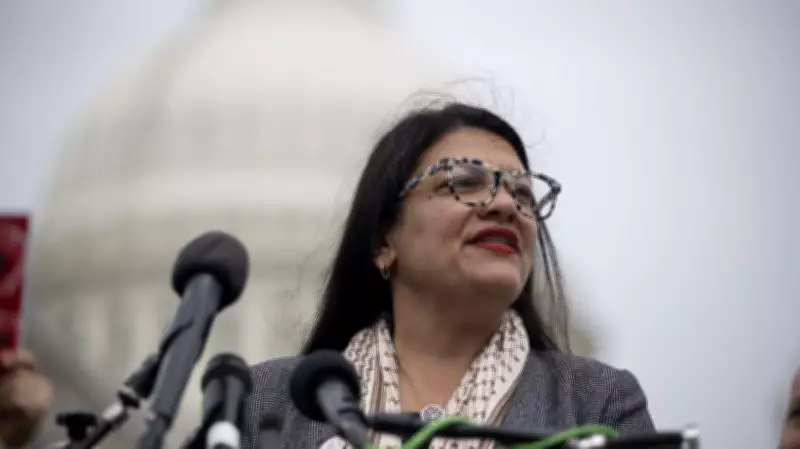
Ramirez stated at a press conference outside the Capitol that basic living expenses have risen while the federal minimum wage has remained unchanged for over a decade. "People are working full-time jobs and still cannot afford to live," she said, emphasizing that the current $7.25 per hour "is not a living wage. That is a wage to keep you poor and barely keep you living."

Phase-In Period
The proposal includes a multi-year phase-in period, with larger employers—those with at least 500 workers or $1 billion in gross annual revenue—required to reach $25 by 2031. Smaller businesses would have until 2038 to comply. Ramirez explained that the gradual approach would "ensure small businesses are able to get to $25 an hour."
After the initial increases, the minimum wage would be tied to two-thirds of the national median hourly pay. The bill also seeks to eliminate the tipped minimum wage for restaurant servers and other workers who rely on gratuities.
Support and Opposition
Rep. Mejia, who was sworn in last week, expressed confidence that passing a $25 minimum wage is achievable with dedicated organizing. The bill has garnered support from several House Democrats, including Reps. Chuy Garcia (Ill.), Rashida Tlaib (Mich.), Lateefah Simon (Calif.), and Greg Casar (Texas), chair of the House Progressive Caucus. Labor unions such as the Service Employees International Union and the National Education Association, along with advocacy group One Fair Wage, also back the measure.
However, the bill faces opposition from all Republicans and likely some moderate Democrats, particularly those from states where the wage would more than double. While the GOP has been the primary obstacle to wage increases over the past 17 years, centrist Democrats have often resisted more aggressive proposals.
Current Landscape
The federal minimum wage has remained at $7.25 since 2009, following a series of increases under President George W. Bush. A majority of states, including several red ones, have raised their own wage floors, but 16 states, mostly in the South, still adhere to the federal rate. In some states, restaurants can pay servers as little as $2.13 per hour, provided tips bring their wages up to the regular minimum.
Several blue states now have minimum wages around $17 per hour, and some high-cost blue cities are nearing $20. Last year, San Diego passed a law pushing the minimum wage for certain hospitality workers to $25 by 2030. Mejia, who won a New Jersey special election, acknowledged critics may say the proposal is "too much, too fast," but insisted it is possible with committed organizing. "The truth is we know there isn’t a corner in these United States where making less than $25 is tenable," she said.