Defense Secretary's 'American' Language Quip Draws Widespread Criticism
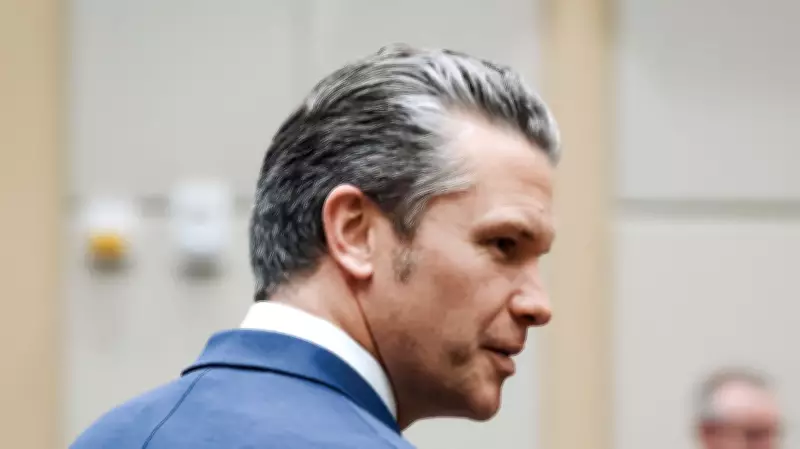
Defense Secretary Pete Hegseth has ignited a firestorm of criticism this week following remarks he made during a speech at President Donald Trump's Miami golf club. The incident occurred at the "Shield of the Americas" summit, where Hegseth quipped to Latin American leaders that he only speaks "American." This comment came immediately after President Trump himself expressed disinterest in learning other languages, setting a contentious tone for the international gathering.
Trump Sets the Stage with Language Remarks
President Trump opened the summit with remarks that drew laughter from attendees while highlighting his linguistic limitations. "I'm not learning your damn language, I don't have time," Trump declared, acknowledging that Secretary of State Marco Rubio has a "language advantage" because he speaks Spanish. Trump emphasized his preference for interpreters rather than language acquisition, stating firmly: "That much I won't do."
When Rubio later addressed the crowd in Spanish with Trump's permission, the president returned to the podium with a joking inquiry: "Is he better in Spanish or in English? I think he's better in Spanish." This exchange created the context for Hegseth's subsequent controversial statement.

Hegseth's 'American' Declaration and Muted Response
Taking the podium after these exchanges, Hegseth told the president and assembled leaders: "Mr. President, I only speak American." While this drew some laughter from the audience, observers noted the response was noticeably more subdued than the reaction to Trump's earlier language jokes. The remark quickly spread across social media platform X, where Hegseth faced widespread mockery and criticism for referring to English as "American."
This incident reflects a broader pattern within Trump's political sphere of promoting English-only perspectives. Many critics argue this approach equates being "American" exclusively with speaking English and being from the United States, despite Spanish being the second-most-spoken language in the country.
Historical Context of Language Politics
The controversy occurs against a backdrop of significant language-related actions by the Trump administration. Last year, Trump signed an executive order designating English as the official U.S. language, though experts largely viewed this move as symbolic. The administration has also demonstrated hostility toward multilingualism in other contexts, most notably during the controversy surrounding Puerto Rican superstar Bad Bunny's selection as the 2026 Super Bowl halftime performer.
Trump publicly criticized Bad Bunny's performance as "an affront to the greatness of America," absurdly claiming "nobody understands a word this guy is saying." Hegseth had previously celebrated right-wing counterprogramming announced to run during Bad Bunny's show. The singer's performance notably included the message "Together, we are America" and references to countries throughout the Western Hemisphere.
Expert Analysis of Language as Political Strategy
Jorge Coronado, professor of Latin American literatures and director of the Latin American & Caribbean Studies Program at Northwestern University, provided sharp analysis of the summit remarks. "It's no news to anyone that Trump's administration has been, even by U.S. standards, remarkably outspoken about its xenophobia and in support of its white nationalism," Coronado told HuffPost.
He continued: "[Trump's] hostility to multilingualism, and the counterpart embrace of monolingualism, has a long legislative and cultural history in the US. It seems clear to me and I think anyone who hears him that his insistence on English only is an integral part of the cultural politics of white nationalism and xenophobia."
Cultural Implications and Hemispheric Perspectives
Coronado identified deeper implications in Hegseth's specific word choice. "Hegeseth's intention seems clear: to signal the fear and anxiety that other languages, and the people that speak them, create for those who support a white, English-only USA," he explained. The professor noted the particular arrogance of using "American" to refer to a language, since in Spanish, "América" encompasses the entire Western Hemisphere.

"While Latin Americans understand the U.S.-based use of 'American' to signal people and things originating in or related to the U.S., it's long also been taken to be a signal of the U.S.'s arrogance vis a vis the hemisphere," Coronado said. "In Spanish, 'América' means the entire hemisphere, and so all people here are 'americanos' as Bad Bunny so joyfully pointed out."
Broader Political Strategy and Educational Implications
Coronado connected the language controversy to broader administration policies. "To turn the term [America] into one that designates a language, as I understand Hegeseth did, is unusual but also part of an isolationist, go-it-alone proposal that unfortunately seems to [be] the current administration's actual, and variously disastrous, political strategy in the world."
The professor also linked what he called Hegseth's "delusional idea that the U.S. only speaks English" to the Trump administration's broader attacks on higher education. "Ignorance, or rather the call to ignorance, is very powerful and comfortable for the fearful," Coronado concluded. "And there is no doubt it unfortunately attracts votes from a significant portion of voters in the U.S."
The Shield of the Americas summit was ostensibly convened to coordinate joint U.S. and Latin American military action against cartels in the region, an effort Trump termed "the Americas counter-cartel coalition." However, the language controversy has overshadowed these stated objectives, highlighting instead deep cultural and political divisions regarding American identity and hemispheric relations.