Harper's Passionate Defense of Canada Fills Void Left by Smith's Cautious Stance
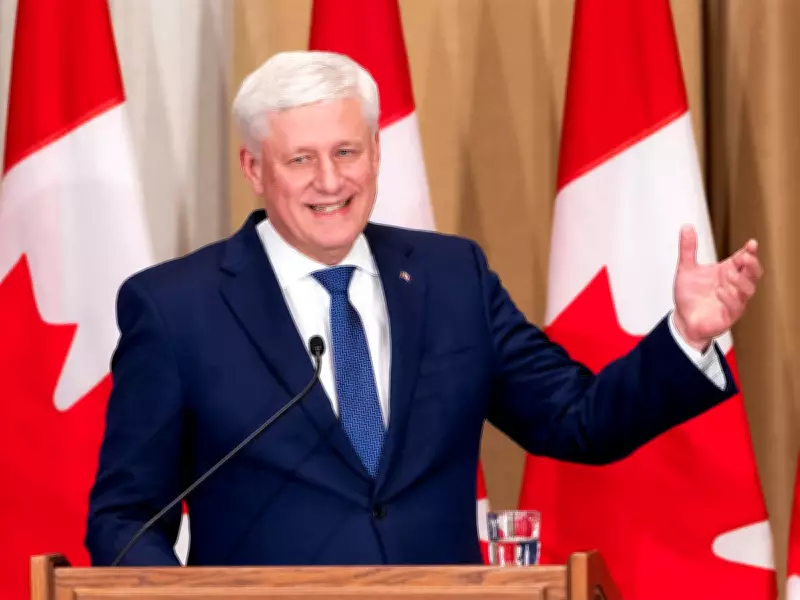
As Alberta awaits clarity from Premier Danielle Smith regarding her position on Confederation and separatist movements within the province, a prominent voice has emerged to champion national unity where political leadership appears hesitant. Former Prime Minister Stephen Harper demonstrated what decisive leadership looks like on this critical issue during his official portrait unveiling ceremony in Ottawa, offering a stark contrast to the premier's more measured approach.
The Leadership Vacuum in Alberta Politics
To his credit, former premier Jason Kenney was unafraid to address separatist sentiments directly during his tenure. However, Smith's apparent trepidation stems from political realities: the forces that contributed to Kenney's political downfall overlap significantly with those advocating for separation referendums. The premier clearly fears suffering a similar political fate should she take a strong stand against separatist movements.
Fortunately, Harper has stepped forward as a prominent Albertan whose level of respect and political track record in the province remains unmatched by any other living politician. His willingness to speak clearly about national unity provides what Smith has thus far been unwilling to deliver.

Harper's Unambiguous Message of Unity
During his speech at the portrait unveiling ceremony on February 3, Harper declared unequivocally: "We must preserve Canada... we must make any sacrifice necessary to preserve the independence and the unity of this blessed land." While not directly referencing Alberta separation movements, the message was unmistakably clear in its defense of national unity.
This powerful statement stands in contrast to Smith's approach. The premier has made numerous legislative and procedural changes that allow separatists to proceed with their petition efforts while steadfastly refusing to criticize the movement or its core ideas. Smith maintains she believes in a "sovereign Alberta within a united Canada," but has defended her approach by stating she won't "demonize or marginalize" Alberta separatists.
The Nuance of Political Discourse
Criticizing ideas or expressing disagreement does not constitute demonization or marginalization, a distinction that appears blurred in current political discourse. Smith herself is not shy about criticizing federal Liberals or provincial NDP policies, yet she applies different standards when addressing separatist movements within her own province.
Standing up for one's country represents patriotism rather than an attack on political opponents. Being a nationalist does not require blanket endorsement of every government action or inaction throughout Canadian history. Harper's intervention helps clarify this distinction at a time when political rhetoric often conflates criticism with personal attack.
The Historical Context and Current Implications
The absence of this debate during Harper's tenure as prime minister, and its likely absence had Conservatives won the last federal election, highlights how political context shapes national unity discussions. Harper's unique position as a respected conservative figure from Alberta makes him particularly effective in addressing separatist sentiments without appearing partisan or dismissive of legitimate regional concerns.
As Alberta moves toward what appears to be an unavoidable referendum on separation, leadership on national unity becomes increasingly crucial. Harper has demonstrated that defending Canada requires neither demonization of political opponents nor marginalization of regional perspectives, but rather clear articulation of national values and commitment to Confederation.
The premier could deliver a similar message if she agrees with Harper's fundamental premise about preserving Canadian unity. Whether she will choose to do so remains an open question as Alberta navigates complex political waters where national identity and provincial autonomy intersect.