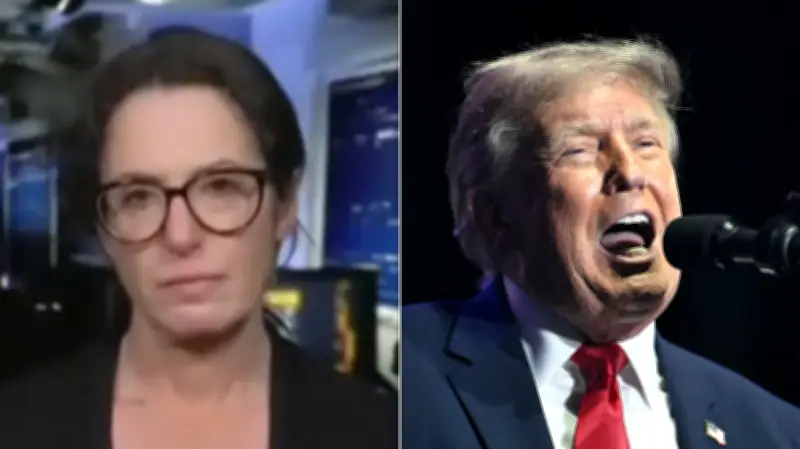
New York Times reporter Maggie Haberman said Wednesday that President Donald Trump does not appear to believe he will face consequences for his erratic behavior, as described in her new book co-authored with Jonathan Swan, "Regime Change: Inside the Imperial Presidency of Donald Trump." Appearing on CNN's "The Source With Kaitlan Collins," Haberman discussed Trump's recent actions, including his abrupt cancellation of a bipartisan housing bill.
Trump's Gut Instinct and Lack of Concern
Host Kaitlan Collins read an excerpt from the book, stating that Trump was "operating on pure gut instinct" more than ever before and willing to take risks that could throw his presidency, the Republican Party, and the world into chaos. Haberman agreed, saying, "Yes, I do think that what we are seeing right now is very in line." She noted that Trump's behavior is consistent with trusting his gut more than in his first term.
When asked if Trump cares about hurting Republicans on the ballot, Haberman responded, "The president just wasn’t interested. ... He’s not behaving like somebody who cares. Maybe he will start to at some point, but he is not right now. And I’m not sure whether he particularly believes he will suffer consequences."

Cancellation of Housing Bill Sparks Backlash
Haberman pointed to Trump's decision to cancel the signing of the 21st Century ROAD to Housing Act, a landmark bipartisan bill aimed at addressing the national affordability crisis. Trump demanded that Congress first pass his SAVE America Act, which would require documentary proof of U.S. citizenship for voter registration. The reversal drew bipartisan criticism.
According to Haberman, Trump's own pollster circulated a confidential memo in December warning that the White House and GOP needed to be "honest" with voters about the affordability crisis to avoid midterm losses. The housing bill was intended to address that issue, but Trump abandoned it.
Book Chronicles Unconstrained Second Presidency
Haberman and Swan's book details Trump's second term as an "imperial presidency" where he operates without restraint. Haberman noted that Trump sees fewer polls than during his first term and is not receptive to harsh realities, leading to greater risks.