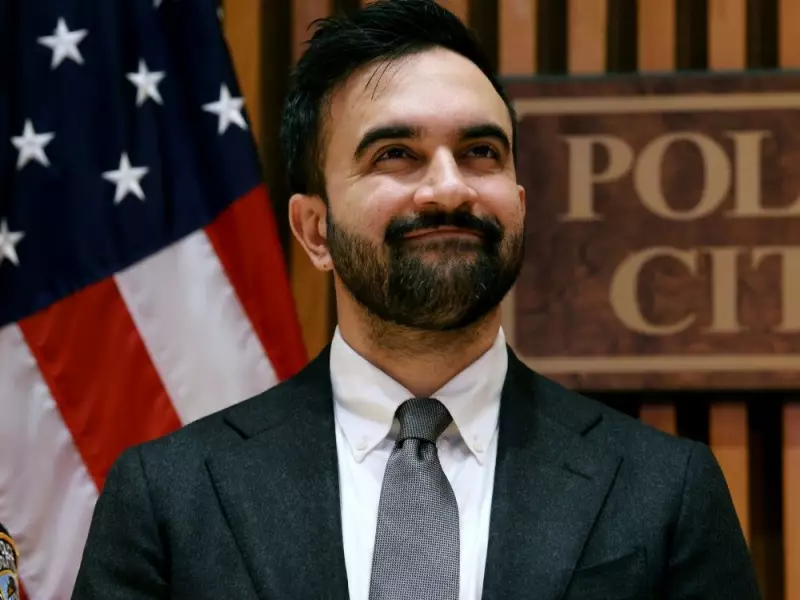
In the wake of a major international event—the Trump administration's capture and extradition of Venezuelan dictator Nicolas Maduro in early January 2026—a domestic ideological skirmish briefly captured attention. The focal point was the inaugural address of New York City's new mayor, Zohran Mamdani, a proud member of the Democratic Socialists of America.
A Clash of Political Framing
During his swearing-in ceremony, which featured Senator Bernie Sanders, Mayor Mamdani proclaimed a central goal for his administration: "We will replace the frigidity of rugged individualism with the warmth of collectivism." For many conservative commentators, including columnist Jonah Goldberg, this phraseology was deeply problematic. Goldberg argues that the term "collectivism" is widely understood as a label for extreme left-wing political systems, making the promised "warmth" seem ominous, especially when juxtaposed with the fate of Venezuela's socialist regime.
The controversy, however, extends beyond that one phrase. Goldberg contends that the entire framing—pitting "frigid, rapacious capitalism" against "nurturing, warm government help"—is a decades-old tactic of the hard left. This narrative, he suggests, is mirrored by the right's own simplification of debates as a struggle between the American dream and "sinister un-American collectivism."

The Myth of 'Rugged Individualism' in Modern America
Goldberg delves into the historical origins of "rugged individualism," a term coined by President Herbert Hoover in 1928. He notes that Democrats and democratic socialists have campaigned against this concept ever since, painting Hoover and conservatives as heartless libertarian zealots. This portrayal, Goldberg asserts, is an unfair caricature that persists today, ignoring the reality of Hoover's progressive Republican background and the significant expansion of government spending during his term.
The core of Goldberg's critique is that this binary framing is divorced from reality. He challenges the notion that New York City—or the United States broadly—operates under a system of "devil-take-the-hindmost" capitalism. To illustrate his point, he highlights the vast apparatus of the modern state:
- The New York City budget Mayor Mamdani inherited includes $19.26 billion for public assistance.
- The city employs over 300,000 people in roles like social work, sanitation, education, and health inspection.
- At the federal level, roughly half of all spending goes to entitlement programs like Medicare, Medicaid, and Social Security.
- A dense network of regulatory agencies (the EPA, SEC, OSHA, etc.) governs economic activity.
"It is flatly preposterous," Goldberg writes, "to look at New York City in 2026... and see devil-take-the-hindmost capitalism at work."
Taxation and the 'Fair Share' Debate
Goldberg also addresses the common refrain from figures like Bernie Sanders about the wealthy paying their "fair share." He cites 2022 data showing that in New York City, filers with incomes over one million dollars—comprising less than 1% of all filers—paid 40% of the city's income taxes. Nationally, he notes, the top 10% of earners pay about three-quarters of federal income tax revenue.
He presents other figures for consideration: the poorest 20% of Americans receive an estimated $6 in government benefits for every $1 paid in taxes, and the average wage earner will ultimately receive more in entitlements than they contributed.
"Maybe it’s bad that the top 10% of American tax filers make nearly half of the income in America... Maybe it’s good that the average wage earner will receive more in entitlements than they paid in," Goldberg states. "Reasonable people will differ. But that’s the point."

His conclusion is that talking about an America that doesn't exist—whether as a free-market dystopia or a realm of rugged individualism—makes reasonable political discourse impossible. If the current robust safety net is dismissed as "rugged individualism," then proposals for further collectivization understandably raise alarms. The dysfunctional framing, he argues, prevents pragmatic debate about reforming or expanding government action in any ideological direction.