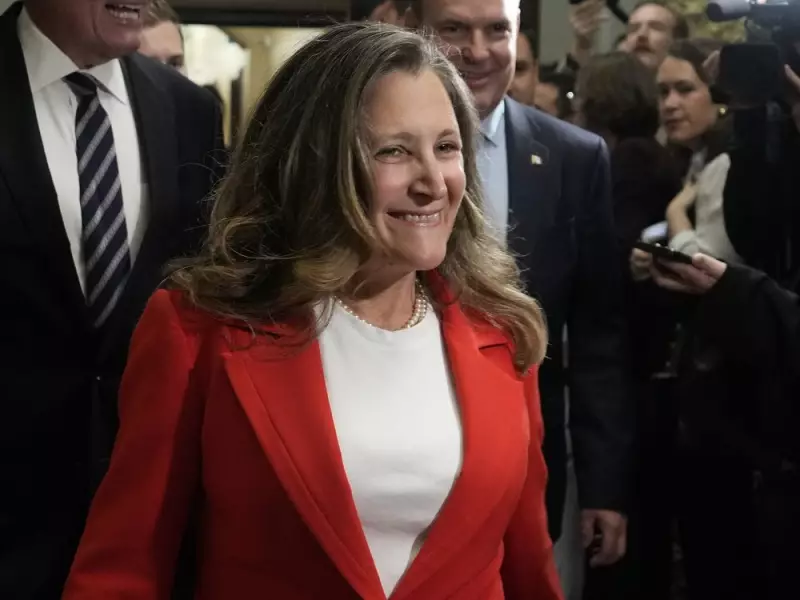
In a significant political development, former Deputy Prime Minister Chrystia Freeland has announced her intention to leave the House of Commons and take on a new advisory role with the government of Ukraine.
A New Chapter in Foreign Service
The Liberal Member of Parliament for University—Rosedale stated on Monday, January 5, 2026, that she plans to depart Parliament in the "coming weeks." This move follows her decision to accept an unpaid position as an economic advisor to Ukrainian President Volodymyr Zelenskyy.
Freeland will also be stepping aside from her role as Prime Minister Mark Carney's special representative for the reconstruction of Ukraine to assume this new international position. She made the announcement via a statement posted on her social media account.

Commitment to Democracy and Gratitude to Constituents
In her statement, the former federal finance minister framed her decision as a commitment to supporting global democracy. "Ukraine is at the forefront of today’s global fight for democracy, and I welcome this chance to contribute on an unpaid basis as an economic advisor to President Zelensky," Freeland wrote.
She expressed deep appreciation for the support she received from her riding. "In the coming weeks I will also leave my seat in Parliament. I want to thank my constituents for their years of confidence in me. I am so grateful to have been your representative," her statement concluded.
Political Context and Immediate Impact
Freeland's departure will trigger a by-election in the Toronto riding of University—Rosedale, a seat she has held since 2013. Her exit removes a high-profile and experienced figure from the Liberal caucus and the Canadian political landscape.
The move underscores the deep personal and professional connections many Canadian officials have forged with Ukraine since Russia's full-scale invasion began in 2022. Freeland, who is of Ukrainian heritage and speaks the language, has long been a vocal supporter of Ukraine's sovereignty.
Her transition from a formal Canadian government role to an advisory position with a foreign government marks a notable shift in her career, moving from domestic and international policymaking to a focused, voluntary advisory capacity.