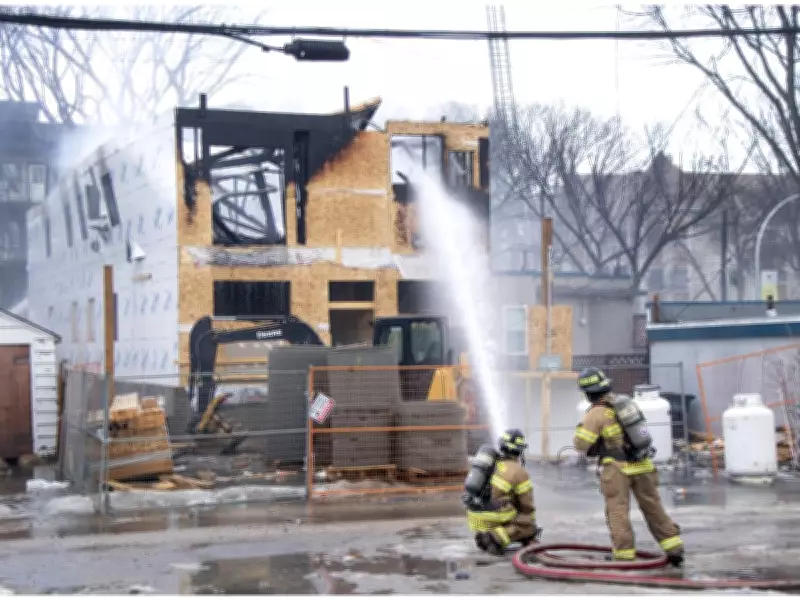
In an emergency, every second counts, yet thousands of Edmontonians are experiencing longer wait times for fire rescue services. Supporting new fire halls and fleet equipment will be critical in this next budget cycle, because we cannot accept unnecessary risk and inequitable services for Edmontonians.
Response Times Exceed Targets
Most of Edmonton’s fire stations are located within Anthony Henday Drive, while homes extend beyond it. Despite their best efforts, Edmonton Fire Rescue Services (EFRS) has noted these areas are seeing response times three minutes longer than the targeted response time, and those three minutes can make all the difference. This is why capital funding in the upcoming budget should be focused on essential investments in safety, like fire halls.
Record Demand for Services
Last year, EFRS received more than 91,000 calls for service, making 2025 one of the most demanding years ever. Fleet vehicles were dispatched 166,009 times, which amounts to more than 450 times per day. These numbers tell us clearly about the demands on this service.

We have seen the devastating impact of wildfires across our province. Just two years ago, our beloved Jasper lost upwards of 30 per cent of its structures in a tragic wildfire, leaving many residents with nothing. In Edmonton, we have had our own scares. In 2023, Ward Anirniq was impacted by a grass fire in Albany. As the fire neared homes, residents were evacuated, and it was only due to the good work of EFRS that the blaze was contained. Our city’s beautiful river valley and other green spaces pose a significant risk when conditions are hot and dry, and we need to be prepared.
Growth Outpacing Investment
We are playing catch-up, because our growth has outpaced our investment in fire services. Over the past five years, we have seen an 18-per-cent population increase. Our fire rescue services must keep pace. Our fire stations are serving increasingly larger areas and populations, and it is not sustainable.
We know that six new fire halls (Big Lake, Wedgewood, Chappelle, Riverview, Cumberland and Horse Hills) are imminently needed in the next four years, and I will be pushing for their funding in the next budget.
Cost-Effective Solutions
We need to be extremely practical on the design and costs of these new halls. We need fire stations fast, and at a reasonable cost. We can build these next fire halls for less, to make sure they meet the needs and functions of the EFRS without enhancements that add costs without proportionate benefits. Funding for these stations is critical, or Edmontonians will pay the price. We cannot cut corners on this issue or defer it any longer.
Fleet Replacement Needs
In addition, EFRS has had to deploy fleet units that are past their life cycle. At a minimum, EFRS needs three new pumper trucks and two new rescue units to meet daily service demand.
These numbers don’t account for times when units are out of service for regular maintenance, repairs, future growth of stations, or replacement of life-cycled units. The need is far greater than just one factor.
Aging units require more costly repairs and are at greater risk of failure. Ultimately, the cost of maintaining aging units outweighs that of replacing them on schedule. Additionally, procurement timelines for new units have doubled or even tripled over the past six years, from 300 days to 700–900 days, so we need to plan for the future now.