A pair of congressional Democrats are introducing legislation designed to put a stop to a scourge of "pop-up" super PACs — groups that form only weeks or days before an election and spend millions to influence a race without giving voters a chance to find out who is paying for the ads before ballots are cast.
Such "pop-up" PACs have become increasingly common in American political life, appearing in races from Illinois to Texas to New Jersey this election cycle alone. Republicans have repeatedly used them to register groups with progressive-sounding names and run ads intending to promote Democratic candidates they view as weaker in a general election. Democrats have used the same tactic in the past. At other points, these PACs have simply been used to hide unsavory sources of money.
The legislation, sponsored by Reps. Jason Crow (D-Colo.) and Chris DeLuzio (D-Pa.), would give PACs 48 hours to disclose donations of more than $1,000 made in the 20 days before an election, essentially eliminating the ability to spend significant sums without any disclosure whatsoever.

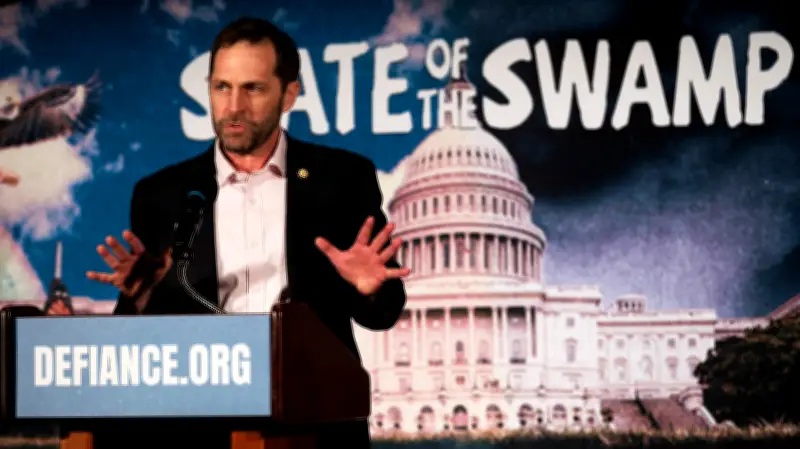
"Special interests and billionaire donors shouldn't be able to anonymously and secretly funnel money into our elections," Crow said in introducing the legislation. "The American people are tired of dark money distorting our politics. Congress must clean up corruption and strengthen our democracy."
The most prominent pop-up super PACs in the 2026 election cycles have included a trio of AIPAC-funded super PACs formed only weeks before the election that subsequently spent millions backing candidates in Illinois' Democratic primaries. While the PACs were widely suspected of being fronts for the pro-Israel group, campaign finance records did not make the connection official until after voting was complete.
Similarly, a Republican-linked group dubbed "Lead Left PAC" spent millions backing Democratic candidates in Pennsylvania, Nebraska and Texas, apparently because the group's leaders believed those candidates would be easier to defeat in the November general election. The group has yet to disclose its donors, even though voting is over in all three primaries.
The bill has little chance of quickly becoming law, but could make its way into a broader proposal cracking down on money in politics at some point. Democrats largely united behind such a proposal during President Joe Biden's administration, but the refusal of Sens. Joe Manchin of West Virginia and Kyrsten Sinema of Arizona to weaken the filibuster doomed it. The legislation's introduction comes as Democrats increase their focus on President Donald Trump's corruption and a campaign finance system many Americans view as broken in the run-up to the 2026 midterm elections. Crow is the co-chair of a newly launched End Corruption Caucus.
A number of campaign finance reform and good government groups have backed the proposal, including Citizens for Responsibility and Ethics in Washington, Democracy Defenders Action, End Citizens United/Let America Vote Action Fund, and Public Citizen.