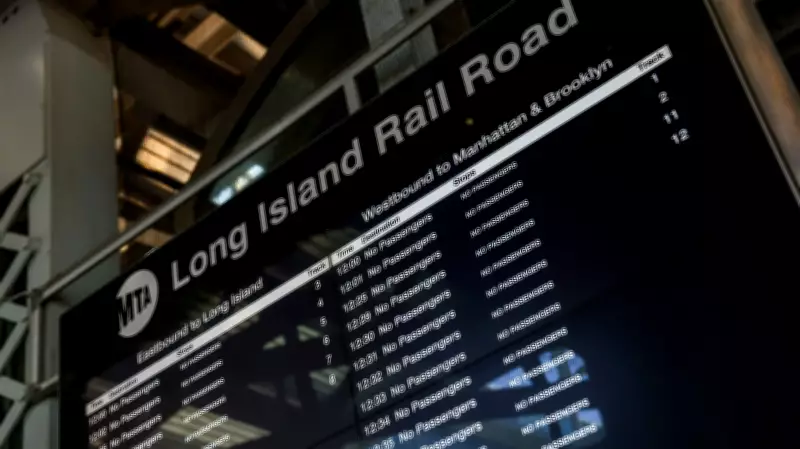
NEW YORK (AP) — Negotiators on Monday reached an agreement to end the strike that halted service on the Long Island Rail Road (LIRR), the busiest commuter rail system in North America. New York Governor Kathy Hochul announced the deal on X, stating it "delivers raises for workers while protecting riders and taxpayers" and that service would resume Tuesday at noon.
Strike Details
The Metropolitan Transportation Authority (MTA) and leaders of five labor unions had been bargaining for a new contract for years before the unions walked off the job at 12:01 a.m. Saturday. Approximately 250,000 commuters use the rail system daily, which connects New York City to its eastern suburbs. Locomotive engineers, machinists, signalmen, and other workers picketed at train stations throughout the weekend.
The MTA offered free but limited shuttle buses during morning and evening rush hours starting Monday, leaving most commuters to navigate car, bus, and subway routes. Governor Hochul had urged LIRR riders to work from home if possible.

Negotiations
Union officials and the MTA negotiated Sunday afternoon into the early hours of Monday after encouragement from the National Mediation Board, the federal agency governing labor relations for railroads and airlines. The five unions, representing about half the train system's workforce, demanded raises to help workers keep up with inflation and rising living costs. The MTA argued that the unions' initial demands would lead to fare increases.
The two sides had been negotiating a new contract since 2023, but talks stalled over salaries and healthcare premiums. The Trump administration became involved in September after the unions requested a panel of experts, temporarily averting a strike, but no deal was reached.
Impact on Commuters
The LIRR serves hundreds of thousands of commuters living along a 118-mile-long (190-kilometer-long) land mass that includes Brooklyn and Queens in New York City and the Hamptons, a summertime destination for the wealthy near its eastern tip. Most riders live outside New York City in two Long Island counties with nearly 3 million residents. The last LIRR strike occurred in 1994.
Monday Morning Rush Hour
Ridership on the free but limited shuttle buses was lighter than expected. The MTA provided shuttles from several Long Island locations to New York City subway stations. Officials had urged the roughly 250,000 daily riders to work from home if possible. During the morning commute, more than 2,000 people used the shuttle service, while the agency had prepared for about 13,000 riders.
The strike's first impacts were felt over the weekend as baseball fans found alternative ways to get to Citi Field in Queens for the New York Mets game against the New York Yankees. If the strike had extended into Tuesday evening, basketball fans attending New York Knicks playoff games at Madison Square Garden, located above the railroad's Penn Station hub, could have faced disruptions.
This story has been corrected to show that the body in charge of the LIRR is the Metropolitan Transportation Authority, not the Metropolitan Transportation Agency.
McCormack reported from Concord, New Hampshire. Associated Press writers Ted Shaffrey and Joseph Frederick in New York contributed.