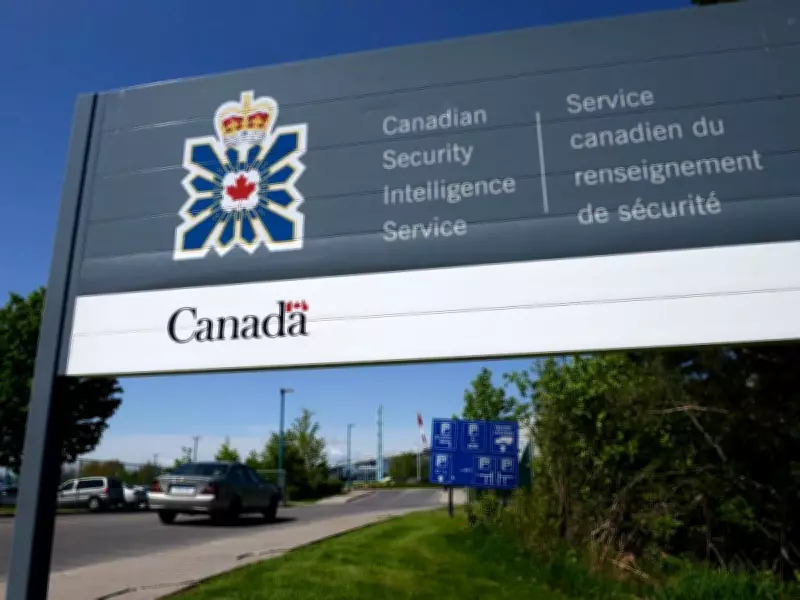
Last week, the Canadian Security Intelligence Service released its 2025 Public Report, offering an assessment of security issues in the country. While the annual report outlined typical domestic threats, it revealed a surprisingly basic and outdated understanding of antisemitism and its manifestations in Canada.
The report states, 'Antisemitism continues to persist in Canada, manifesting itself in different ways: vandalism and graffiti, circulation of hate propaganda, intolerant and racist statements, bomb threats to Jewish schools and community centres, etc.' However, it adds that not all hateful behaviour or online posts, including antisemitic speech, constitute threats to the security of Canada as defined in the CSIS Act. Since 2014, there has been one attack and five disrupted plots targeting Canadian Jewish institutions or interests, including the August 2025 arrest of a minor in Montreal who intended to target Jewish people and police.
None of these examples are new. Recent months have seen copious violence targeting the Jewish community, especially gunfire targeting synagogues and businesses in Toronto and Vaughan. Despite Canada's intelligence apparatus and the fact that the Jewish community is the most targeted group for hate crimes, CSIS has not been able to sufficiently disrupt and prevent such attacks.

There is much at stake for Canada. On one hand, we may have a well-meaning intelligence and law enforcement community determined to protect freedom and democracy. On the other hand, over the past 25 years, Canada's institutional and social architecture has shifted from promoting pluralism and coexistence to confrontation and rising security threats.
In a public dialogue with Raheel Raza, president of the Council of Muslims Facing Tomorrow, I pointed out that threats against the Jewish community and Canada have been mounting since the 'Israeli Apartheid Week' campaign launched on university campuses in the early 2000s, followed by vigorous 'Boycott, Divestment and Sanctions' (BDS) campaigns against Israel. Generation after generation of Canadian students graduated holding false, defamatory, and discriminatory views against Israel and, by extension, the Jewish community. Raza and I agreed that our warnings had gone unheeded. It feels like CSIS was tuned out of this growing threat.
By the time October 7 happened, a global intifada immediately followed with chants of violence on the streets of Toronto and Montreal. The so-called 'extremists' referred to in the CSIS report had already laid the foundation for the violence seen today. Now the Jewish community is warned of an imminent attack, with threats accelerating and becoming unpredictable and decentralized.
The report rightly looks at foreign actors, including Iran, as motivating many of these threats, but it fails to sufficiently examine domestic enablers grounded in institutional structures. Universities continue to undermine civic freedom by marginalizing Jewish students and faculty, creating a toxic environment. One student is now suing her university, alleging a poisoned learning environment.