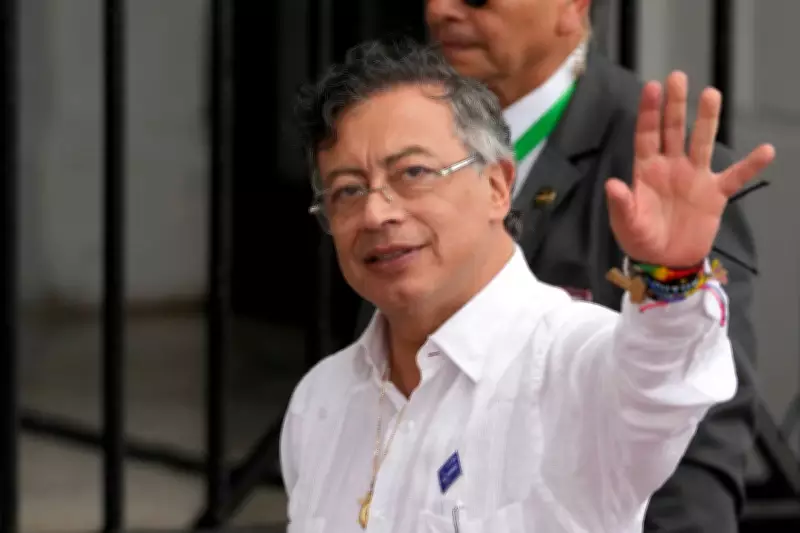
Colombian President Gustavo Petro Claims to Have Evaded Assassination Plot
In a startling development from South America, Colombian President Gustavo Petro has announced that he recently survived what he describes as an assassination attempt. The leftist leader, who took office in 2022, made the claim without providing extensive details about the alleged plot, but the assertion has immediately raised concerns about political stability and security in the Andean nation.
Political Context and Regional Implications
President Petro, a former guerrilla fighter turned politician, has pursued ambitious reforms since his election, including peace negotiations with remaining armed groups and environmental policies. His administration has faced significant opposition from various sectors, making security a persistent concern. This reported assassination attempt occurs against a backdrop of historical political violence in Colombia, a country that has struggled with internal conflict for decades.
The timing of this announcement is particularly sensitive, as Colombia continues to navigate complex peace processes and economic challenges. While specific details about the alleged attempt remain scarce, the president's statement has prompted immediate reactions from both domestic and international observers.

Security Protocols and Official Response
Colombian security forces are reportedly investigating the claims, though no formal charges or suspects have been publicly identified. The presidential protection detail, which is among the most robust in Latin America, is said to have implemented enhanced security measures following the incident. This event underscores the ongoing risks faced by political leaders in regions with histories of political violence.
International allies, including neighboring countries and global powers, are monitoring the situation closely. The stability of Colombia, as one of South America's largest economies and a key regional player, has significant implications for continental affairs and international relations.
Historical Precedents and Current Climate
Colombia has experienced numerous political assassinations throughout its history, most notably the 1948 killing of presidential candidate Jorge Eliécer Gaitán which sparked La Violencia, a decade of civil conflict. More recently, the 1989 assassination of presidential candidate Luis Carlos Galán and the 1990 killing of another candidate, Carlos Pizarro, remain painful chapters in the nation's political narrative.
President Petro's claim comes at a time when political polarization remains high in Colombia, with his administration facing both fervent support and vehement opposition. The incident raises questions about:
- The effectiveness of current security measures for high-profile officials
- The potential impact on ongoing peace negotiations with armed groups
- The broader implications for democratic processes in the region
- The response from international human rights organizations
As investigations proceed, the Colombian government faces the dual challenge of ensuring the president's safety while maintaining transparency about security threats. This development serves as a stark reminder of the volatile nature of politics in regions with complex histories of conflict and the continuing need for robust democratic institutions and security protocols.