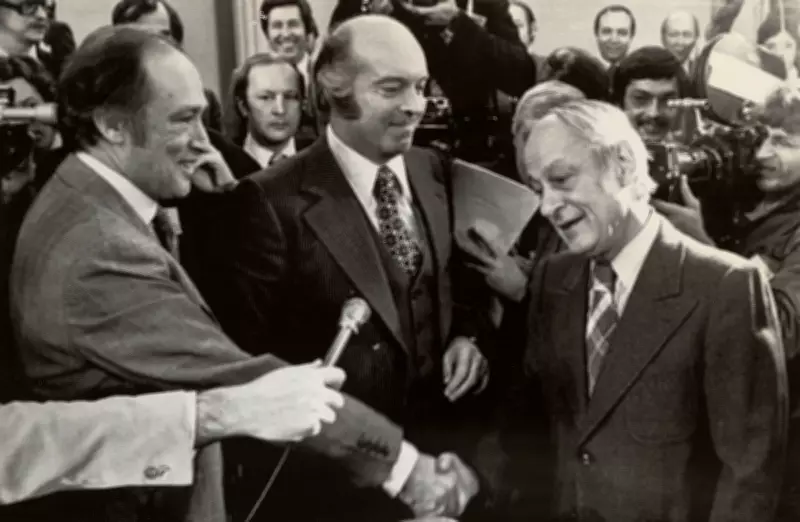
Claude Morin, the influential architect of Quebec's Quiet Revolution who later faced controversy as an RCMP informant, has died at the age of 96. His passing marks the end of an era for Quebec politics, where his contributions to modernizing the province were overshadowed by revelations of his secret dealings with federal authorities.
Early Life and Political Rise
Born in Quebec City, Morin was a key figure in the Quiet Revolution of the 1960s, a period of rapid secularization and modernization in Quebec. He served as intergovernmental affairs minister under Premier Rene Levesque, playing a crucial role in shaping Quebec's sovereignty movement. His work on constitutional negotiations and federal-provincial relations earned him respect as a strategist and intellectual.
Controversy and Legacy
Morin's career unraveled in the 1990s when it was revealed he had been an informant for the Royal Canadian Mounted Police (RCMP) during the 1970s, providing information on separatist activities. This disclosure shocked Quebec's political landscape and cast a shadow over his earlier achievements. Despite the controversy, many acknowledge his foundational role in Quebec's modern identity.

Reactions and Remembrances
Political figures across Canada have offered condolences, recognizing Morin's complex legacy. Quebec Premier Francois Legault described him as a "brilliant mind who shaped our province," while others emphasized the need to reconcile his contributions with his later actions. Historians note that Morin's story reflects the tensions between Quebec nationalism and federal oversight.
Morin is survived by his family. A private funeral is planned, with a public memorial expected in the coming weeks.