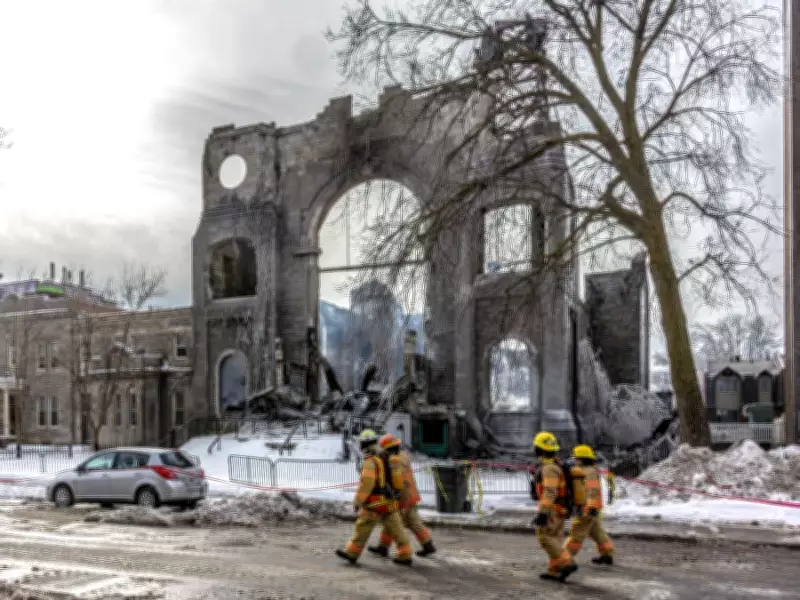
It has been exactly five years since the shocking accusation that the remains of 215 students had been discovered on the site of the Kamloops Indian Residential School, which triggered a wave of church arsons starting in British Columbia and spreading across the country. While the initial spike has abated, churches are still burning, and almost nothing has changed. Worse, it is not even clear that the hate directed towards churches is fueled only by the Kamloops announcement.
Since I last reported on the church burnings in November 2024, at least six more churches have been destroyed and three others damaged by fire. These churches are not just buildings; they are places of worship where generations have been baptized, married, and laid to rest. In some cases, they served as community centres and food banks.
Concern for these burning churches has been insufficient. There have been modest security grants for cameras, lighting, and alarms at religious institutions through the Canada Community Security Program, and some improved data from Statistics Canada. However, the data shows that investigations are progressing slowly, and not enough arrests are being made.

There have been some public condemnations from politicians, but nothing that has undone the damage of former Prime Minister Justin Trudeau's statement that the anger against the Catholic Church was "real and fully understandable." This implied that the potential grave sites, which have yet to be exhumed despite millions of dollars earmarked for the task, and the murderous accusation that accompanied the claim, were 100 per cent verified.
There has been no coordinated national response or task force set up to investigate the church burnings, no national or regional integrated investigations unit as suggested by a report from the Macdonald-Laurier Institute, and no mandatory minimum sentences for attacking houses of worship, as advocated by the Conservatives.
I endeavour to update Canadians on the situation in the hope that, by understanding what these churches meant to their communities, governments will finally see this as the national emergency that it is.
The nearly century-old All Saints Ukrainian Orthodox Church in Bellis, Alberta, burned down on September 21, 2025. The RCMP and fire investigators determined that an accelerant had been used and classified it as a confirmed arson. It is one of the rare cases where arrests were actually made, after the arsonists were caught by police driving stolen vehicles.
The Thunderchild First Nation's only church was broken into and then burned on September 1, 2025. As with most church burnings, the case remains unsolved. It hit the church's co-pastor, Alvina Thunderchild, especially hard. She told the press that members stood outside crying while it burned.