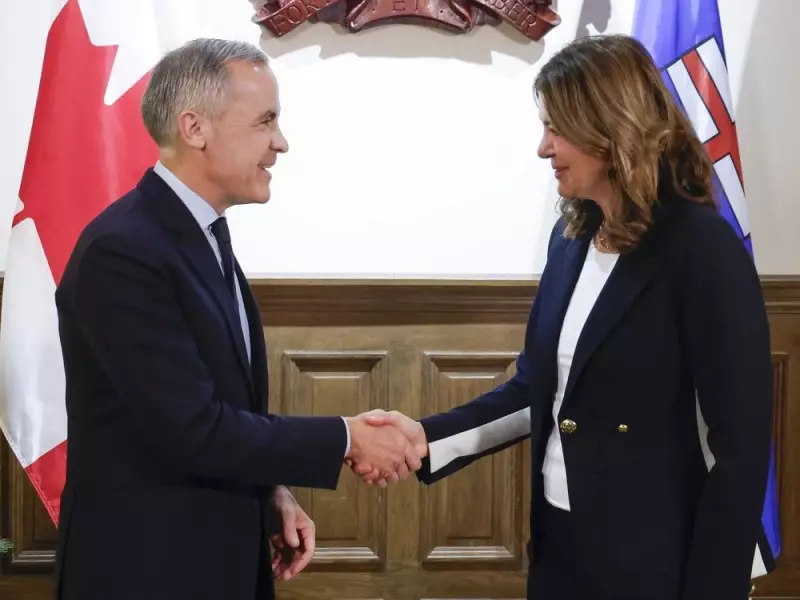
The political landscape in Ottawa was reshaped this week by an image many thought improbable: Liberal Prime Minister Mark Carney and Conservative Alberta Premier Danielle Smith sharing a handshake and broad smiles. The occasion was the signing of a landmark memorandum of understanding (MOU) on December 1, 2025, paving the way for a new, privately funded oil pipeline to the Pacific coast.
A Deal for Alberta, A Shock to the System
The agreement is a significant victory for Alberta's energy sector. The proposed pipeline would have the capacity to transport up to one million barrels of crude oil daily to British Columbia for shipment to Asian markets. In tandem, the federal government announced it would roll back several environmental regulations long criticized by Alberta's oil and gas industry as impediments to growth.
This move is seen as a strategic effort by Carney to secure a political truce with the western province, where frustration with Ottawa had fueled separatist sentiments. "These irritants, deeply felt by many Albertans, were increasingly becoming something of a threat to the country’s national unity," notes political analyst Raphaël Melançon.

Immediate Fallout: A Principle Resignation
While the smiles were genuine in Alberta, the reaction elsewhere was one of dismay. The deal faces staunch opposition from First Nations and the British Columbia provincial government. More immediately, it triggered a seismic event within the federal Liberal cabinet.
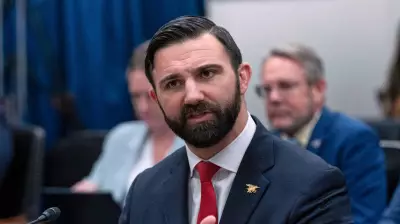
Steven Guilbeault, Carney's Quebec lieutenant and a former climate activist, resigned from cabinet just as the MOU was announced. He will remain a Liberal MP, but his departure was a stark protest against the government's new direction. "A former climate activist, Guilbeault could no longer justify sitting at a cabinet table that had so abruptly shifted on environmental policy," Melançon observes, crediting the minister for surrendering his privileges on principle.
The Carney Liberals: A Party Transformed
Guilbeault's exit highlights a dramatic ideological realignment under Prime Minister Carney. In a few short months since replacing Justin Trudeau, Carney has steered the Liberal Party sharply toward the political centre—and in some respects, to the right of it.
"In many respects, Carney is governing like a Progressive Conservative," writes Melançon, nudging the party back to the centrist posture of the Chrétien and Martin eras. This shift extends beyond energy policy. At a recent G20 meeting, Carney bluntly stated that Canada's foreign policy is no longer "feminist," a stark departure from Trudeau's signature rhetoric.
For many Liberals who came of age during the Trudeau era, the party now appears almost unrecognizable. The question now is whether others will follow Guilbeault out the door. There is speculation that Mélanie Joly may be seeking an appointment as ambassador to France.
Political Risks and a Reshaped Landscape
Carney's strategy to appease Alberta carries significant political risk. It may provoke a backlash from the environmental organizations, Indigenous groups, and progressive voters who formed the backbone of Trudeau's coalition. It also risks alienating Liberal support in Quebec and Eastern Canada, where pipeline projects are less popular.
This vacuum on the centre-left presents a major opportunity for the NDP, long overshadowed by Trudeau's progressive branding, to reclaim its traditional space. Carney's gamble is that a more centrist, economically-focused platform will secure a broader national coalition.
"Governing such a vast federation often forces leaders to make uncomfortable compromises," concludes Melançon. "In trying to appease Alberta, Carney may provoke backlash from groups that once formed the backbone of Trudeau’s Liberal Party of Canada... For the Carney Liberals, the strategy is undeniably risky. Yet in pursuing it, the prime minister is doing more than repositioning his party — in just a few months, he has managed to reshape the country’s political landscape."