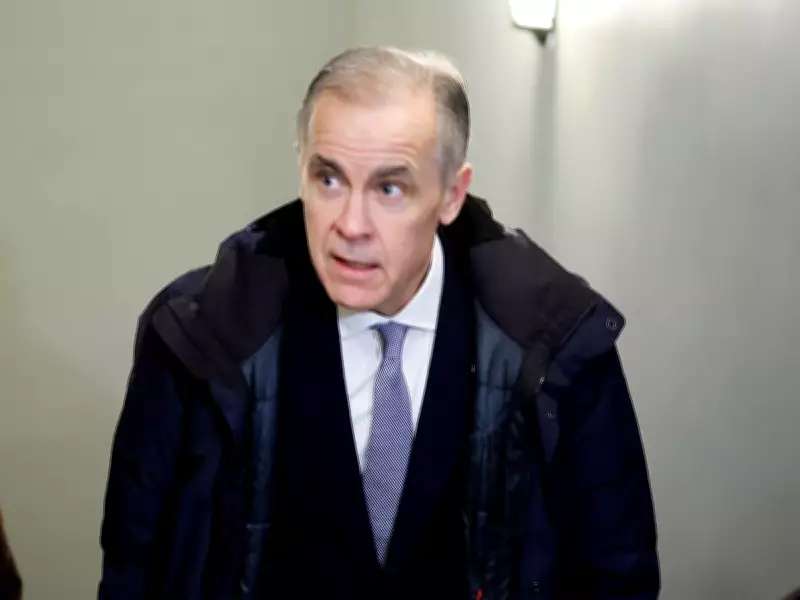
Carney's Privy Council Office Budget Surpasses Trudeau's Despite Austerity Promises
Prime Minister Mark Carney has publicly committed to reducing government operational costs and eliminating bureaucratic waste, yet newly released federal documents reveal his administration is on track to spend more on the Privy Council Office than his predecessor did during his final year in office.
Budget Figures Show Increase Over Previous Administration
According to the Privy Council Office's 2026-2027 Departmental Plan, total planned spending for the upcoming fiscal year stands at $252,265,293, with 1,246 planned full-time equivalent staff positions. This represents a slight increase over the $251,744,189 spent during Justin Trudeau's last complete year as prime minister, amounting to a difference of more than half a million dollars.
The staffing trajectory within the PCO has shown significant fluctuation in recent years. Starting from 1,180 full-time equivalent staff in 2020, numbers climbed to 1,333 by 2024 before dropping to an estimated 1,249 in 2025. The current plan projects further reductions to 1,145 positions by 2028.

Planned Reductions Through Structural Changes
The departmental report outlines several strategies for achieving these staffing reductions, including:
- Flattening the executive structure to eliminate management layers
- Automating Prime Minister correspondence from the public
- Modernizing Governor in Council appointments and Cabinet document systems
- Digitizing routine messenger services
- Reducing HR, Finance and IT staff to align with smaller workforce requirements
- Discontinuing select functions deemed non-essential
The total budget for the Privy Council Office is also projected to decline gradually over the coming years, with estimates of $247,187,902 in 2027 and $239,747,370 by 2028.
PCO's Core Functions and Government Priorities
The Privy Council Office serves as the primary source of non-partisan advice to the prime minister, portfolio ministers, Cabinet and Cabinet committees on matters of national and international significance. According to the departmental report, its mandate includes ensuring Canada's safety and security, promoting fair, transparent and democratic government, and fostering an effective, diverse, inclusive and innovative public service.
In the document, Prime Minister Carney emphasized that "This plan reflects the government's commitment to building our strength at home: bolstering Canada's security, building one Canadian economy, advancing major nation-building projects, and bringing down costs for Canadians."
He further added, "Throughout this work, we will maintain a disciplined approach to public administration. By modernizing the systems we use, embracing innovation, and holding the line on day-to-day operational spending, the Privy Council Office will help ensure that public resources are focused where they have the greatest impact."
Coordinated Approach to Cost Reduction
The report indicates that the PCO will drive a coordinated strategy for reducing government operating costs by providing timely, integrated and evidence-based advice to the Prime Minister and Cabinet. This approach will involve leveraging artificial intelligence within government operations and streamlining procurement processes, while simultaneously strengthening the capacity to assess trade-offs between operational savings and long-term economic performance.
The apparent contradiction between Carney's public austerity pledges and the initial budget increase for his central advisory office highlights the complex balancing act facing new administrations as they attempt to implement structural reforms while maintaining essential government functions. The planned reductions in subsequent years suggest a phased approach to achieving operational efficiencies rather than immediate across-the-board cuts.