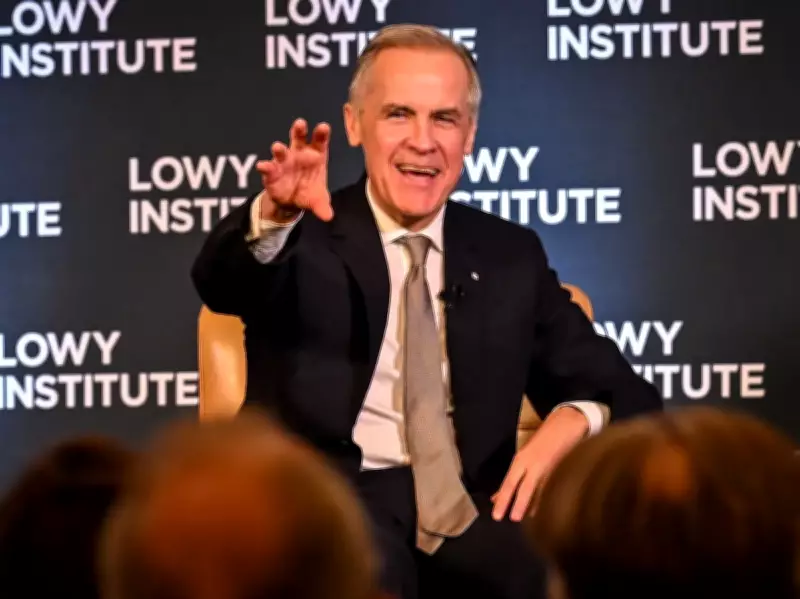
Mark Carney's Evolving Position on Iran Conflict Reveals Policy Confusion
Prime Minister Mark Carney's stance on the military campaign against Iran has become increasingly muddled, revealing significant confusion within the Canadian government's foreign policy approach. What began as clear support for the U.S.-Israel operation has transformed into a contradictory position that attempts to occupy multiple stances simultaneously.
From Clear Support to Contradictory Messaging
Initially, Carney offered unambiguous backing for the military action against the Islamic Republic. During his trip to India on Saturday, he declared that "Canada supports the United States acting to prevent Iran from obtaining a nuclear weapon and to prevent its regime from further threatening international peace and security." This position was reinforced in a joint statement with Foreign Affairs Minister Anita Anand, which emphasized Iran's role as a principal source of instability and terror throughout the Middle East.
The statement further clarified Canada's position by affirming Israel's right to self-defense and explicitly stating that "Canada supports the United States" in its military actions. This initial clarity suggested a firm, principled approach to the conflict.

The Gradual Erosion of a Clear Position
However, this firm messaging began to unravel in subsequent days. By Tuesday, Carney's position had shifted dramatically, settling somewhere between qualified support and partial opposition. The prime minister confirmed that Canada supports the bombing campaign but objected that it was launched without United Nations consultation, calling this approach "inconsistent with international law."
Compounding this legal objection, Carney also called for a "rapid de-escalation of hostilities," which would likely leave the Iranian regime intact to continue threatening its neighbors. This additional element suggested objections beyond mere legal considerations, creating a confusing three-pronged position that simultaneously:
- Endorsed the military campaign
- Lamented the lack of UN involvement
- Called for immediate cessation of hostilities
Internal Divisions and Avoidance Tactics
The policy confusion appears to reflect deeper divisions within the Liberal caucus regarding Middle East policy, particularly concerning Israel. Backbench Liberal MP Will Greaves publicly broke ranks with Carney on Sunday, posting a video to Instagram that opposed "the unilateral and illegal use of military force" while acknowledging Iran's human rights abuses.
Carney's response to this internal dissent was notable for its avoidance. The prime minister cancelled a press conference in India at the last minute and refused to engage with media upon arriving in Australia. Instead, Foreign Affairs Minister Anita Anand presented a new, watered-down position calling for a "diplomatic solution" to the conflict.
Anand's Monday statement urged all parties to prioritize civilian protection and return to negotiations, coming dangerously close to implying moral equivalency between the actions of Israel, the United States, and Iran. Her only saving grace was specific condemnation of Iranian strikes on civilian infrastructure across the Middle East.
The Consequences of Mixed Messaging
This evolving position raises serious questions about Canada's foreign policy coherence and leadership. Among the principled stands political leaders might take on the Iran conflict, three primary positions exist:
- Endorsing the war based on security concerns
- Objecting on legal grounds regarding UN consultation
- Objecting on moral grounds regarding civilian impacts
Taking two of these positions simultaneously creates messaging challenges but isn't necessarily incoherent. However, attempting to occupy all three positions at once, as the Canadian government now appears to be doing, creates significant confusion about Canada's actual stance and undermines the country's credibility on the international stage.

The situation reveals a fundamental tension within the government's approach to Middle East conflicts and raises questions about whether this represents the "middle power leadership" Carney previously championed in Davos. As the conflict continues to unfold, Canada's contradictory messaging may leave allies uncertain about where the country truly stands on one of the most significant security challenges of our time.