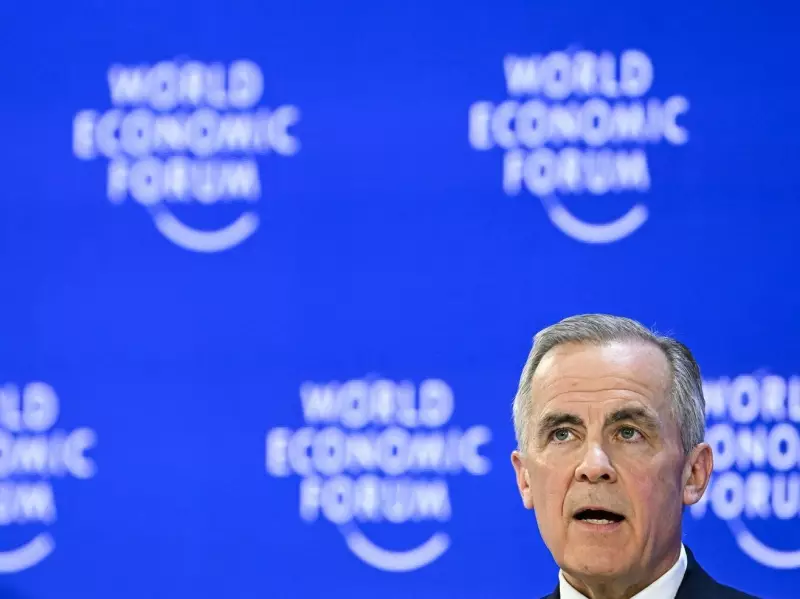
Prime Minister Mark Carney delivered a well-received address at the World Economic Forum in Davos, Switzerland, on January 20, 2026, earning international respect. However, the Prime Minister himself has previously emphasized that Canadians will judge his leadership based on their everyday experiences—specifically, when paying for groceries, managing electricity bills, or seeking affordable housing.
Domestic Realities Trump International Praise
While it is beneficial to have a Prime Minister who commands global admiration, Carney's speech, though a morale booster for a nation weary of insults from U.S. President Donald Trump, does not directly translate to domestic success. Carney correctly noted that his political future will be determined by how effectively he tackles fundamental cost-of-living challenges in Canada, rather than by favorable coverage in international media outlets like the New York Times.
Historical Precedents and Energy Policy Disputes
Former Prime Minister Justin Trudeau also enjoyed widespread international acclaim early in his tenure, including at the World Economic Forum, yet his government ultimately faced significant domestic criticism. In his Davos speech, Carney outlined a vision for Canada to emerge as a leading "middle power" alongside allied nations in a shifting global order. However, his assertion that Canada is an "energy superpower" has sparked debate.

Critics argue that Canada's potential as an energy leader has been hampered by what they describe as a decade of anti-energy policies and sluggish economic growth under the previous Liberal administration. These policies, they claim, restricted the country's ability to export its abundant oil and natural gas reserves to international markets, forcing sales to the United States at discounted rates—a situation that hardly aligns with superpower status.
Political Accountability and International Relations
Conservative Leader Pierre Poilievre and his party are positioned to hold Carney accountable for his commitments to enhance safety, affordability, and economic security for Canadians. This includes scrutinizing Carney's recent comments during a trip to China, where he suggested that Canada's relationship with China is more predictable than with the U.S. and claimed to find "much alignment" with Chinese President Xi Jinping on Arctic sovereignty concerns.
These remarks have raised eyebrows, given Carney's own prior characterization of China as Canada's greatest security threat in April, and ongoing concerns highlighted by foreign interference inquiries. Meanwhile, U.S. President Donald Trump responded to Carney's Davos speech with pointed criticism, asserting that Canada's existence relies on the United States and that the country receives numerous "freebies," urging gratitude from Canadian leadership.
Balancing Global Perceptions with Local Needs
In his address, Carney portrayed the United States, China, and Russia as equally questionable in their adherence to international law. While this stance may resonate in global forums, it underscores the delicate balance Carney must maintain between international diplomacy and domestic priorities. Ultimately, the Prime Minister's success will be measured not by speeches in Davos, but by tangible improvements in the daily lives of Canadians facing pressing economic challenges.