Colby Cosh: Carney's Davos Address Blends Political Critique with Campaign Messaging
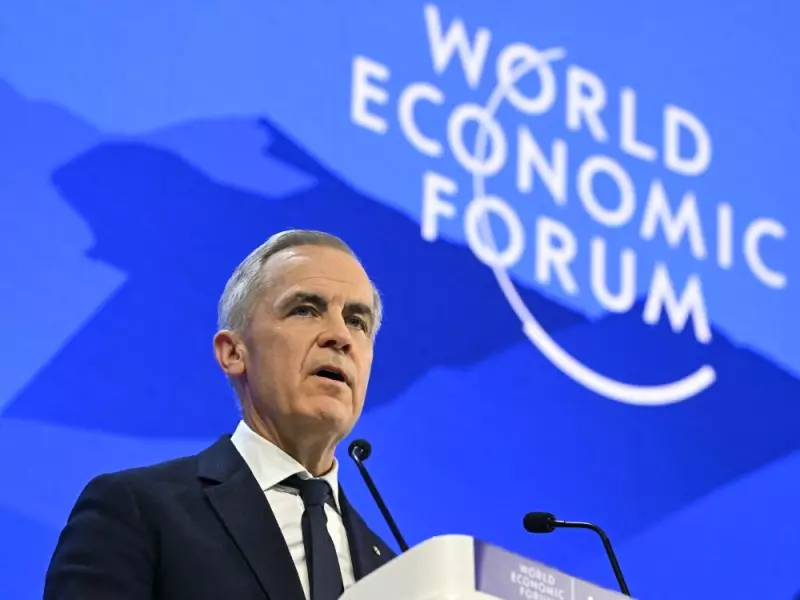
Prime Minister Mark Carney's recent address to the World Economic Forum in Davos has become a focal point of national discussion, with political observers noting its dual nature as both a global policy statement and domestic campaign positioning. The Tuesday speech, delivered to an elite international audience, presented what even generous critics would acknowledge contains elements carefully crafted for Canadian voters back home.
A Performance of Global Credentials
Carney's appearance at the prestigious forum allowed him to harvest his established globalist credentials while projecting an image of deep intellectual engagement. The Prime Minister positioned himself as someone capable of generating genuine interest through substantive ideas rather than superficial presentation—a calculated demonstration of statesmanship meant to resonate with both international observers and domestic constituents.
At first glance, the speech appeared to represent a significant departure from traditional 20th-century Liberal approaches to international relations and soft power. Carney effectively captured a widespread contemporary anxiety about global instability, referencing Russia's aggressive military posture and America's shifting geopolitical stance under what he characterized as "Napoleonized" leadership.

Questioning the International Order
The Prime Minister's critique proved particularly striking given his personal history as a central banker for two sovereign nations—a background that positioned him as a symbol of the very international financial order he now questioned. His comparison of the "rules-based international order" to propaganda mechanisms employed by communist regimes generated immediate attention and controversy.
Perhaps most ironically, Carney delivered his skeptical assessment of multilateralism and "the architecture of collective problem-solving" at the World Economic Forum itself—an institution fundamentally dedicated to those very principles. The cognitive dissonance was palpable enough that some attendees reportedly wondered whether the speech might conclude with dramatic revelations about the speaker's true intentions.
From Multilateralism to Plurilateralism
Ultimately, Carney stopped short of completely rejecting global cooperation frameworks. Instead, he proposed that "middle powers" like Canada should work to reconstruct elements of the international order among themselves, deliberately excluding what he termed the "great powers." This vision bears resemblance to historical movements like the Non-Aligned Movement, albeit with distinct Canadian characteristics.
The Prime Minister criticized great powers for weaponizing economic integration through tariffs and trade leverage—comments that inevitably directed Canadian attention toward the United States. Yet this criticism came shortly after Carney's own diplomatic mission to China, where he successfully negotiated relief from politically motivated seed-oil tariffs affecting Canadian agricultural producers.
Terminological Shifts and Contradictions
Carney's speech contained notable linguistic maneuvers that revealed underlying tensions in his argument. After criticizing obsolete multilateral approaches, he enthusiastically promoted Canada's ongoing trade negotiations as examples of "plurilateral trade"—a distinction that seemed more semantic than substantive to many observers.
This terminological shift—from multilateralism to plurilateralism—occurred within a speech that began with explicit warnings against meaningless elite sloganeering. By the time Carney reached his concluding remarks about relying "not just on the strength of our values, but also on the value of our strength," the contradiction between his stated aversion to empty rhetoric and his employment of similar rhetorical devices became increasingly apparent.

The Realistic Assessment of Power Dynamics
Embedded within Carney's address was a pragmatic recognition of current global power realities. His framework implicitly acknowledged that the United States remains, for the present moment, the only truly "great power" worthy of that designation. Meanwhile, traditional European powers like Britain and France appeared relegated to "middle power" status in his analysis—a classification that might provoke diplomatic sensitivities, particularly from French officials protective of their nation's global standing.
The speech ultimately presented a vision of Canadian foreign policy that attempts to navigate between idealistic international cooperation and pragmatic national interest. While Carney positioned himself as a critic of elite consensus, his proposed solutions frequently resembled modified versions of existing approaches, revealing the complex balancing act required of political leaders operating simultaneously in domestic and international arenas.