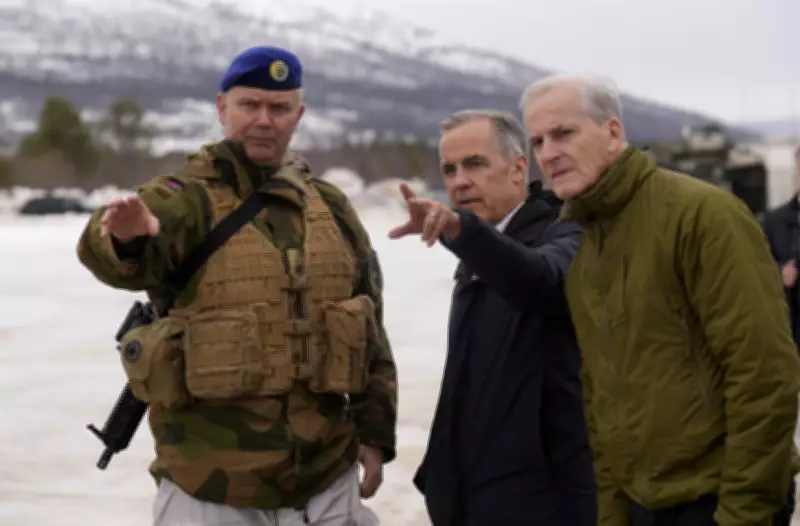
Prime Minister Carney's Arctic Diplomacy Takes a Personal Turn with Nordic Skiing
Prime Minister Mark Carney's official visit to Norway took an unexpected recreational detour, blending high-stakes defense discussions with the traditional Nordic pastime of cross-country skiing. This unique combination occurred just before his scheduled meeting with Norwegian Prime Minister Jonas Gahr Store, underscoring the multifaceted nature of modern diplomatic engagements in the strategically vital Arctic region.
From Military Demonstrations to Mountain Trails
The visit commenced with serious military business at the site of NATO Exercise Cold Response in Bardufoss, Norway, on Friday, March 13, 2026. Carney, alongside Prime Minister Store and Brigadier-General Terje Bruoygard, Commander of Brigade North of the Norwegian Army, observed live demonstrations showcasing allied readiness in extreme cold-weather conditions. The exercise represents a critical component of NATO's Arctic defense strategy, with Canada playing an increasingly prominent role in northern security initiatives.
Following the military观摩, Carney transitioned to a more personal diplomatic activity: Nordic skiing through the Norwegian landscape. This shift from formal defense talks to athletic pursuit reflects a growing trend in international relations where shared cultural and recreational activities build rapport between leaders. The Prime Minister's participation in this quintessentially Scandinavian sport demonstrated respect for local traditions while providing an informal setting for relationship-building ahead of formal negotiations.

Strategic Context of the Norway Visit
Carney's journey to Norway occurs against a backdrop of heightened geopolitical interest in the Arctic, where melting ice caps are opening new shipping routes and resource extraction opportunities. Both Canada and Norway are Arctic nations with significant territorial claims and responsibilities in the region. Their cooperation extends beyond military matters to include environmental protection, indigenous rights, and sustainable development.
The meeting between Carney and Store was expected to address several pressing bilateral issues, including:
- Enhanced coordination on Arctic surveillance and sovereignty enforcement
- Joint research initiatives on climate change impacts in northern ecosystems
- Economic partnerships in sustainable resource development
- Cultural exchanges between indigenous communities in both nations
Broader Implications for Canadian Foreign Policy
This visit signals Canada's renewed commitment to Arctic leadership under Carney's administration. By personally engaging in NATO exercises and regional diplomacy, the Prime Minister emphasizes that northern security remains a top priority for his government. The blending of military and recreational activities also showcases a more holistic approach to international relations, where personal connections complement formal agreements.
Observers note that such visits help strengthen Canada's position within NATO's northern flank, particularly as Russia continues to expand its military presence in the Arctic. The demonstration of interoperability with Norwegian forces during Exercise Cold Response serves as a visible reminder of allied capabilities in challenging environments.
As Carney returned from his Nordic skiing excursion to formal discussions with Prime Minister Store, the symbolism was clear: effective Arctic diplomacy requires both the hard power of military cooperation and the soft power of cultural engagement. This balanced approach may well define Canada's northern strategy in the coming years, as climate change and geopolitical competition reshape the world's final frontier.