

Political Rivalry Spills Onto the Ice and Border Infrastructure
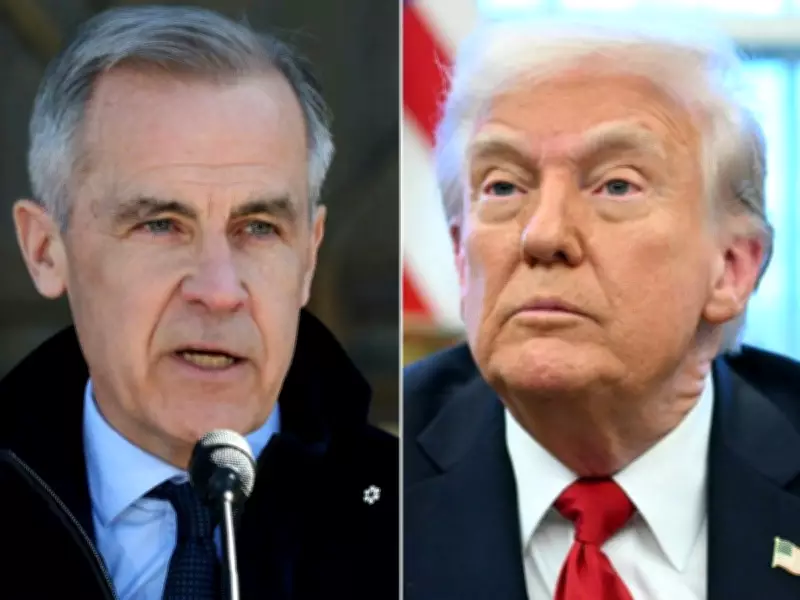
In a dramatic escalation of cross-border tensions, Prime Minister Mark Carney and former U.S. President Donald Trump have engaged in a public spat that intertwines Olympic hockey bravado with disputes over the long-awaited Gordie Howe International Bridge. The exchange, unfolding on social media and through official statements, underscores the fragile state of Canada-U.S. relations under the current political climate.
A Guarantee of Victory Amidst Olympic Pressure
Prime Minister Carney boldly predicted a Canadian hockey victory during a phone call with Trump on Tuesday, directly responding to the former president's provocative comments. "It's a big game today and we're going to win," Carney told reporters he relayed to Trump, setting the stage for a high-stakes showdown at the Milan Olympics. However, as of late in the preliminary round game, the U.S. women's team led Canada 4-0, putting Carney's guarantee in jeopardy and creating nail-biting suspense for Canadian fans.
The rivalry extends beyond the rink, with both the men's and women's teams expected to face off in upcoming medal rounds, amplifying the diplomatic stakes. Trump had previously taken to Truth Social to taunt Canada, suggesting that with "far lower taxes and much stronger security," Canada might someday become the "fifty first state."

Gordie Howe Bridge Becomes a Focal Point of Dispute
The conflict intensified when Trump targeted the Gordie Howe International Bridge, a critical infrastructure project connecting Windsor, Ontario, and Detroit, Michigan. In a social media post, Trump claimed, "Canada is building a massive bridge between Ontario and Michigan. They own both the Canada and the United States side and, of course, built it with virtually no U.S. content." He vowed not to allow the bridge to open until the U.S. is "fully compensated" and treated with "fairness and respect."
Carney responded by clarifying the project's details in his conversation with Trump. "It was a positive conversation," Carney stated. "We discussed the bridge. I explained that Canada, of course, paid for the construction of the bridge, over $4 billion, that the ownership is shared between the state of Michigan and the Government of Canada." He emphasized the cooperative nature of the project, noting the involvement of both Canadian and U.S. steel and workers.
Historical Context and Broader Implications
This dispute revives long-standing grievances, with Trump accusing Canada of treating the U.S. "very unfairly for decades." He even speculated that China might "terminate all ice hockey being played in Canada" if Carney pursued deals with them, a claim Carney dismissed as inflammatory. The tension is palpable, with Ontario Premier Doug Ford expressing confidence that the bridge will open due to its economic benefits for both nations, but acknowledging Trump's unpredictable nature.
The Gordie Howe Bridge, named after the hockey legend known for his "elbows up" style, symbolizes the hope for reconciliation. As Carney noted in French, "the situation will be resolved," but the path forward remains uncertain. The bridge's potential opening is seen as a test of bilateral cooperation, with Ambassador Pete Hoekstra expected to help smooth discussions.
Sports and Politics Collide in a Test of National Pride
Beyond infrastructure, the hockey rivalry carries deep symbolic weight. Canada has not won the Stanley Cup since 1993, a point Trump highlighted in his posts. Carney's guarantee and Trump's counter-call to the American team reflect how sports have become a proxy for broader diplomatic tensions. As the Olympics progress and NHL playoffs approach, the ice will serve as a battleground for national pride, with outcomes potentially influencing political narratives.
In summary, this episode illustrates how personal dynamics between leaders can escalate into public disputes affecting trade, infrastructure, and cultural exchanges. The resolution of the Gordie Howe Bridge issue and the results of upcoming hockey games will be closely watched as indicators of the future trajectory of Canada-U.S. relations.






