Political Leaders Confront Defining Moments as Parliament Reconvenes
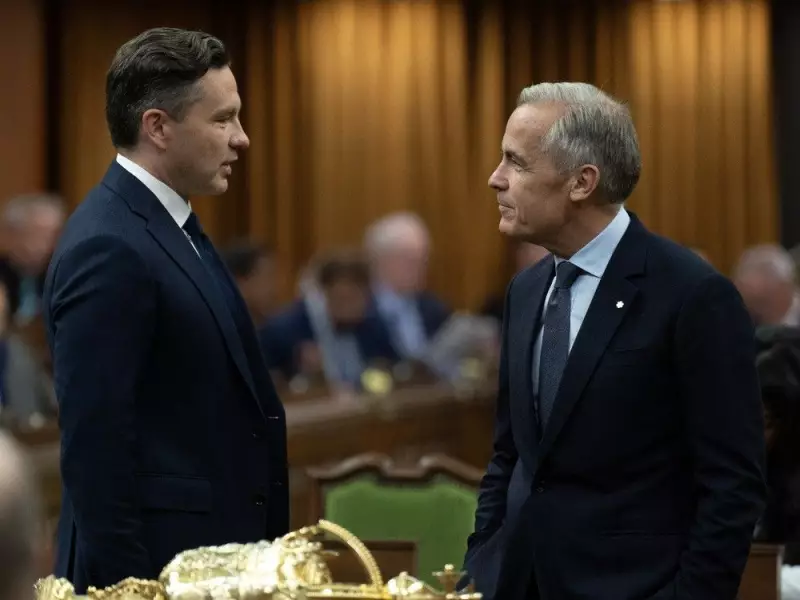
As Canada's Parliament prepares to resume its work on Monday, the nation's two primary political figures find themselves navigating treacherous political terrain. Prime Minister Mark Carney and Conservative Leader Pierre Poilievre, while representing opposing parties, share a common predicament: both are approaching critical junctures that may well determine their political destinies in the coming weeks and months.
Parallel Political Pressures
Despite their ideological differences, Carney and Poilievre face remarkably similar challenges in maintaining their positions of influence and authority. The upcoming parliamentary session represents a crucial testing ground for both leaders, with numerous obstacles requiring careful navigation to secure their political futures.
The Liberal Party continues to maintain polling numbers consistent with their performance during last year's election, while Carney's personal approval ratings remain robust. The Prime Minister recently concluded an international tour that culminated in a well-received address at the World Economic Forum in Davos, generating significant international media attention.

Carney's Complex Economic Agenda
However, the Prime Minister's situation proves more intricate and potentially precarious than initial appearances might suggest. Carney confronts what many analysts describe as one of the most demanding economic agendas in recent memory, attempting to reshape Canada's economic landscape amid slowing growth and the unpredictable administration of a bellicose U.S. president.
The challenges facing Carney's government include:
- Navigating U.S. Relations: The Prime Minister must defend Canadian interests while avoiding antagonizing the Trump administration, particularly with the North American free trade agreement scheduled for review later this year.
- Accelerating Policy Implementation: Many of Canada's most pressing issues require long-term solutions, including trade diversification, productivity enhancement, inter-provincial trade barriers, housing shortages, and infrastructure development.
The Urgency of Tangible Results
Political observers suggest that 2026 may represent a turning point where Canadian voters demand visible progress on key issues. The public increasingly expects concrete achievements rather than policy announcements or memorandums of understanding.
Potential indicators of success that analysts are monitoring include:
- Commencement of construction on enhanced energy pipeline infrastructure to the west coast
- Significant increases in housing construction starts across the country
- Comprehensive agreements on inter-provincial free trade
Carney achieved a potential victory last week with the signing of a trade agreement with China that is projected to reduce or eliminate tariffs on select Canadian agricultural exports while lowering tariffs on approximately 49,000 Chinese-manufactured electric vehicles.
The Conservative Challenge
While the article focuses primarily on Carney's challenges, Pierre Poilievre faces his own set of political hurdles as Parliament resumes. The Conservative leader must navigate the delicate balance of opposition politics while positioning his party as a credible alternative government.
Both leaders recognize that the coming parliamentary session represents more than routine legislative business—it constitutes a critical examination of their leadership capabilities and political strategies that will shape Canada's political landscape for years to come.