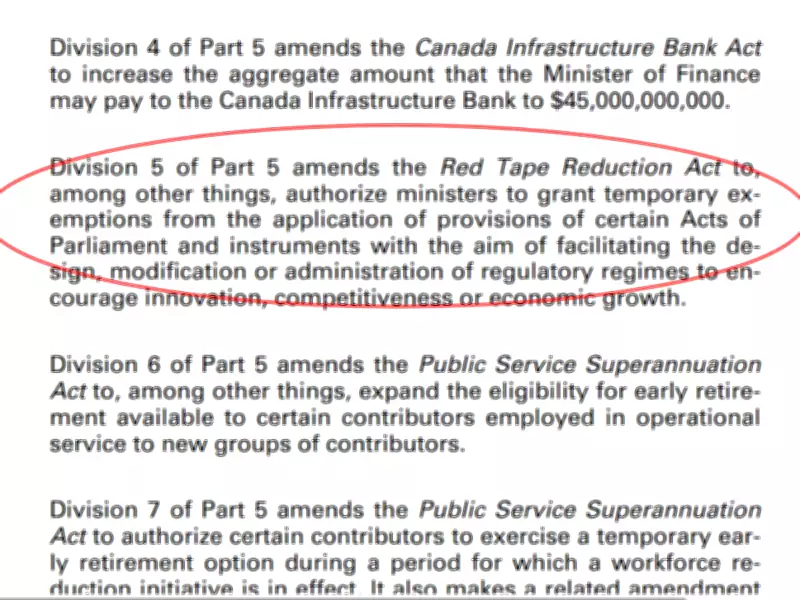
In a significant yet largely overlooked development within the Canadian legislative process, the Carney government has embedded a controversial provision in its latest omnibus bill that would grant cabinet ministers unprecedented authority to bypass most non-criminal laws. This amendment, included in the expansive 634-page Bill C-15, currently under review in the House of Commons, enables ministers to provide special exemptions to any individual, corporation, or organization at their discretion.
Broad Ministerial Discretion Over Legal Frameworks
The clause permits ministers to override acts of Parliament within their respective portfolios, effectively allowing them to sidestep key legislation such as the Canada Health Act, the Indian Act, or the Income Tax Act. During a recent House of Commons committee session, Minister of Canadian Identity Marc Miller defended the provision, describing it as a "useful tool to have" for the government's operations.
Scope and Limitations of the Exemption Powers
Under the proposed changes, ministers could issue exemptions to any "entity," a term broadly defined in federal guidelines to encompass individuals, corporations, and unincorporated organizations. This means that political allies, activist groups, or major corporations could potentially receive preferential treatment, circumventing regulations on areas like food safety, labor standards, or environmental protections. However, the exemptions are temporary, lasting only three years before requiring renewal, and they cannot be applied to the Criminal Code.

Economic Justification and Legislative Context
Bill C-15 justifies these extraordinary powers by stating they are necessary "to encourage innovation, competitiveness or economic growth." The provision is integrated through amendments to the Red Tape Reduction Act, a 2015 law originally passed under the Conservative government of Stephen Harper to reduce administrative burdens on businesses. The bill adds language reframing the act to also focus on modifying "regulatory regimes to encourage innovation, competitiveness or economic growth."
Concerns Over Accountability and Transparency
The decision-making process for granting exemptions is left entirely to the "opinion" of the minister, based on what they "consider appropriate." This lack of clear criteria raises questions about accountability and the potential for abuse, as ministers could wield significant power without robust oversight mechanisms. Critics argue that such broad discretion undermines the rule of law and could lead to unequal application of regulations across different sectors.
As Bill C-15 progresses through parliamentary scrutiny, this provision is likely to spark intense debate among lawmakers and the public, highlighting tensions between economic objectives and legal integrity in governance.