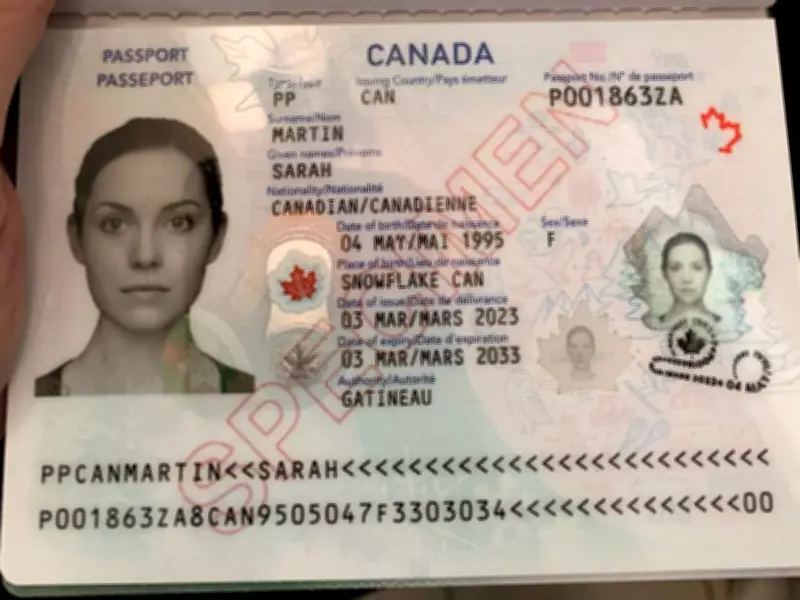
Canadian passport fees, which have remained unchanged for over a decade, are scheduled to increase at the end of March. The federal government will implement a new pricing structure that aligns with Canada's Consumer Price Index (CPI) inflation, marking a significant shift in how these essential travel document costs are calculated.
Annual Adjustments Based on Inflation
Effective March 31, passport fees will be subject to the Services Fees Act, legislation that mandates fee adjustments in response to inflationary changes measured by the CPI. Immigration, Refugees and Citizenship Canada (IRCC) has announced that fees will now increase annually based on the CPI figures published by Statistics Canada.
"The Passport Program's base fee structure alone can no longer support the cost of Program operations," IRCC stated in a late January order to council seeking amendments to fee regulations under the Financial Administration Act.

Specific Fee Increases
Using the 2.7 percent benchmark from April 2024, IRCC has calculated the following adjustments:
- Five-year adult passports will increase from $120 to $123.24
- Ten-year adult passports will rise from $160 to $164.32
- Canadians abroad will pay $267.02 for decade-long passports, up from $260
The initial increase represents approximately $9 or less depending on the specific service, but this could be followed by additional adjustments in coming years as IRCC conducts "a comprehensive fee structure review" to ensure all verified passport program costs are accurately reflected.
Financial Pressures on the Passport Program
IRCC revealed that since the last time inflation was accounted for in program fees, the CPI has increased by 14.5 percent. This discrepancy has created significant financial strain, with expenditures outpacing revenues by approximately $121 million in fiscal year 2024-2025.
The agency acknowledged that previous fee adjustment formulas, introduced in 2013 for a 10-year cycle, were based on a projected annual inflation rate of just two percent. "Actual inflation over the business cycle was higher than projected," IRCC noted, adding that fees haven't accounted for inflation since the cycle ended in March 2023.
Limitations of Previous Formulas
According to IRCC, the existing formulas are too limited in scope and fail to account for many factors driving increased expenses, including:
- Application processing costs
- Information technology investments
- Various support services
- External service costs like mailing and courier expenses
The agency provided a striking example: if the old formulas were applied for the 2025-2026 fiscal year, fees for applicants outside Canada would need to jump by 20 percent since this group represents such a small proportion compared to domestic applicants. Meanwhile, domestic applicants (representing 90-95 percent of all passport clients) would actually benefit from a one percent reduction under the outdated formula.
Potential Impact on Vulnerable Groups
IRCC has recognized that certain populations may be disproportionately affected by the fee adjustments, even with the relatively modest initial increases. The agency specifically mentioned concerns about:
- Clients with low incomes
- Families with multiple children
- Elderly clients and those with fixed incomes
- Students and youth
- Refugees
- Vulnerable Canadian consular clients
While the current changes are described as nominal, the shift to annual CPI-based adjustments represents a fundamental change in how passport fees will be determined moving forward, potentially affecting millions of Canadians who require these essential travel documents for international mobility.