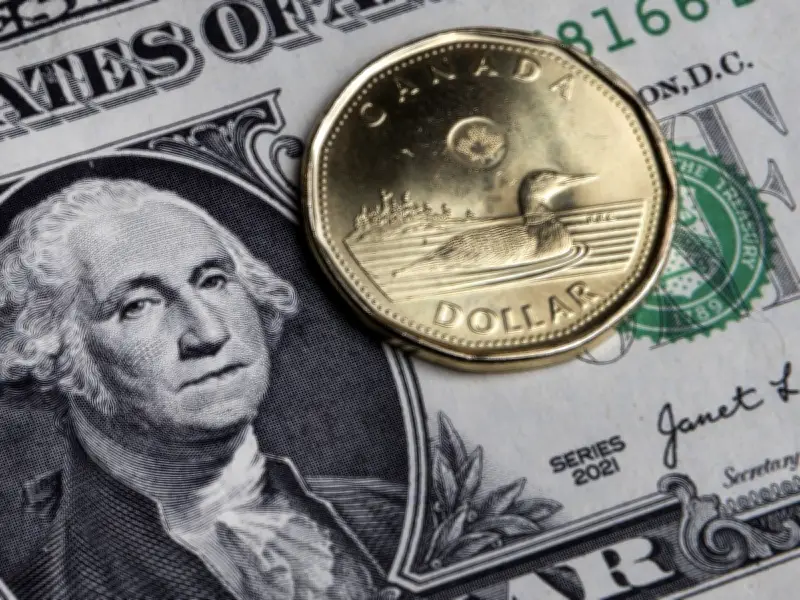
The Canadian dollar's recent slide to $1.42 against the U.S. dollar is a symptom of Liberal mismanagement, according to economist Margareta Dovgal, who argues that without productivity improvements, Canadians' standard of living will continue to stagnate.
Personal Anecdote Highlights Inflation
Dovgal recalls visiting a budget pub in Vancouver a decade ago where a burger or plate of pasta cost $5. Today, the same items run around $12, more than doubling. Meanwhile, average weekly wages have risen only about a third since 2016, to roughly $1,300, but that increase has been swallowed up by rising costs. Groceries have risen just as much, and the asking rent on a Vancouver one-bedroom has more than doubled, from around $800 in 2013 to $3,000 today. Gas that cost $1.25 a litre ten years ago now pushes $2 per litre.
Dollar Depreciation and Productivity
In late June, the loonie hit $1.42 against the U.S. dollar, its weakest in more than a year. Economist David Rosenberg, known for his bearish forecasts, expects the dollar to reach $1.50 soon and $1.60 (62.5 U.S. cents) later unless there are significant productivity improvements. That level hasn't been seen since early 2002. Rosenberg's forecast is based on unit labour costs (ULC), which measure pay per hour divided by the value produced in that hour. In Canada, ULC is rising around eight per cent a year, while in the U.S., it's close to flat. This is because American workers produce more value each hour, making labour costs relatively more affordable.

Impact on Imports and Standard of Living
As the dollar depreciates, imports become more expensive in relative terms. Dovgal argues that Canadians are essentially receiving a national pay cut just as the cost of living gets harder to bear. The decline in the dollar has been driven by a combination of declining investment, rising labour costs, and worsening productivity.
Decoupling from Oil Prices
In 2007, rising oil prices pushed the loonie toward parity with the U.S. dollar, benefiting the economy through drilling programs, camp wages, welding contracts, and equipment orders. However, around 2017, that link started to falter. Oil revenues still flow, but more of the cheque now goes to bondholders in New York or buyback programs for shareholders in Houston. Alberta Central, a lender for credit unions, found that the correlation between oil prices and the Canadian dollar didn't just weaken after 2017—in places, it actually flipped. As conflict in the Middle East drove WTI near US$100 this spring, the loonie barely moved, staying stuck around 73 cents.
Investment Confidence and Prosperity
Capital decisions in the oilsands translate to wages for Canadians only when energy investors have confidence that putting money back into Canada yields a return. When they lose that confidence, Canada loses that investment and the prosperity that flows from it. Dovgal concludes that the tumbling dollar is a direct result of Liberal mismanagement, and without policy changes to boost productivity and investment, the nation's standard of living will continue to erode.