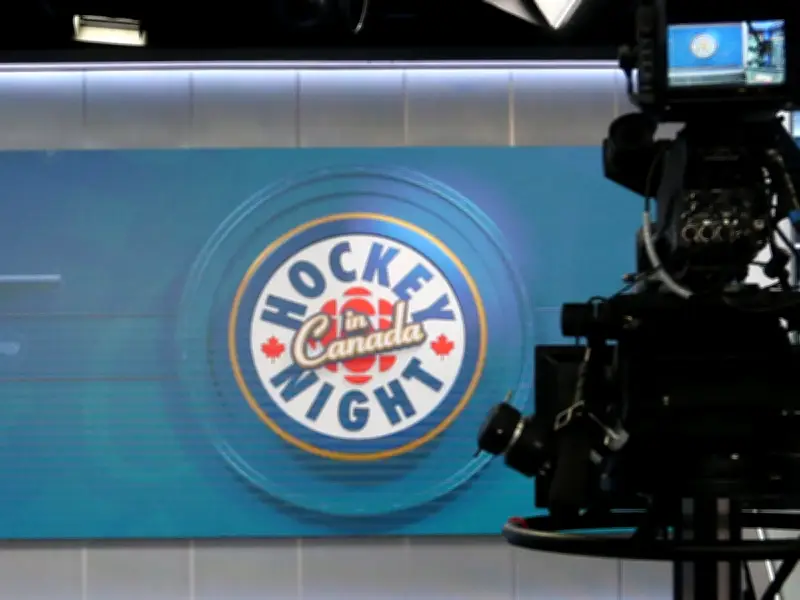
Old-fashioned over-air TV signals are what economists call a “public good.” One person’s “consumption” of them doesn’t reduce anyone else’s. That makes them unlike a hamburger, say, which is a “private good”: the hamburger I eat is denied to you. I put quotation marks around “consumption” because some public goods don’t get consumed. Over-air broadcasts of the first episodes of Hockey Night in Canada (HNIC) are approaching 74 light-years away now, getting close to some of the stars in the Big Dipper. I wonder if Dipperites will recognize them as signs of intelligent life.
Public Goods vs. Private Goods
People also can’t be excluded from consuming public goods: if you’ve got a TV, you can receive the signals, simple as that. In the jargon, public goods are “non-rivalrous” and “non-excludable.” You could argue that the HNIC broadcasts of the 1950s were public goods. A natural confusion is to think “public goods” are goods provided by the state. But many are actually private goods. I consume my state-provided appendectomy, you don’t. Same with my education. Maybe my getting educated benefits you in some way — or harms you, if I major in Anti-capitalist Studies — but it’s my education, not yours. Much of what modern governments do is to provide private goods like appendectomies and educations that mainly benefit their immediate recipients. Economists naturally wonder why governments do that.
Financing Public Goods
Public goods, ones people can’t be excluded from consuming, are hard to finance. How do you get people to pay for TV signals when all they need is a TV set to pull them down from the ether? Postwar Britain cleverly decided to tax TVs, criminalize avoiding TV tax, send out trucks with signal detectors to find tax cheats, and give all the TV-tax revenues to a state broadcaster, the BBC. But then how does the broadcaster decide what to show? Programming decisions inevitably become political, not necessarily in the party-politics sense, but in the sense of there being a bureaucratic process that different groups and individuals can try in various ways to influence. All viewers are equal but some will have more sway than others.

Canada's Approach
In this country, we didn’t impose a TV tax but instead financed early TV with a mix of tax revenue and advertising. The advertising provided a bit of market-style discipline. The public broadcaster could raise extra revenue by showing more of what the public wanted to see rather than what TV bureaucrats thought their captive market ought to see. Even bureaucrats like a little extra money now and then.
Modern Technology Changes Everything
But — somebody please tell Ottawa! — all this has gone the way of the dinosaurs. We now have the technology — have had it for some time, actually — to make television signals and streams into private goods. We can charge people for what they watch and exclude them if they don’t pay. As with hamburgers. People who hadn’t been paying naturally are upset by this possibility. No one wants to start paying for something they’ve been getting for free (even if they’d already been paying through taxes and the advertising cost built into the prices of goods and services they bought). But do people have a basic human right to free TV? They didn’t before 1950. If they do now, when did they get it? I don’t see it in the Charter of Rights and Freedoms.
Canadians don’t love hockey because we have Hockey Night in Canada. We have Hockey Night In Canada because so many of us do love hockey. Those who want to watch hockey still can. Those who don't won't have to pay taxes to help CBC buy the rights to it. The end of HNIC on CBC is not a national tragedy; it's a natural evolution in a world where TV is no longer a public good.