

Federal Government Shifts Approach to Combatting Hate with New Advisory Council
The era of specialized federal positions dedicated to combatting Islamophobia and antisemitism has officially ended in Ottawa. In a significant policy shift announced on Wednesday, the Liberal government revealed plans to replace these individual roles with a new, broader entity: the Advisory Council on Rights, Equality and Inclusion.
This new council will address issues of hatred and racism in a more comprehensive manner, moving away from what officials describe as existing "silos" toward a unified approach that emphasizes what "unites us" rather than what "divides us." While this structural change appears defensible from an administrative perspective, it's worth examining the troubled history of the Islamophobia position in particular.
The Controversial Tenure of Canada's First Islamophobia Representative
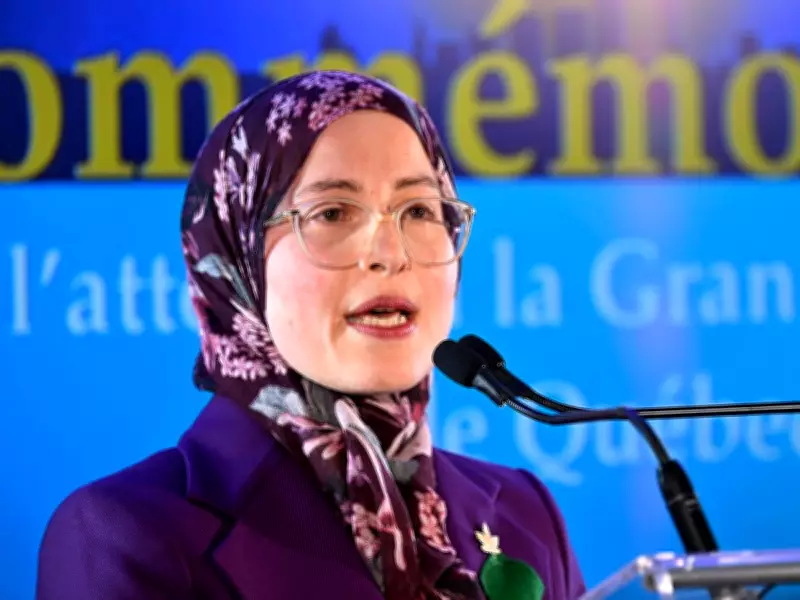
The appointment of Amira Elghawaby as Canada's inaugural Special Representative on Combatting Islamophobia in February 2023 sparked immediate controversy, particularly in Quebec. Every political party in the provincial legislature voted to condemn her appointment, with only the far-left Québec Solidaire abstaining before later declaring she wasn't "the right person" for the position.

Elghawaby's primary transgression, according to critics, was her suggestion that Islamophobia exists in Quebec—a statement that many found difficult to dispute given the openly expressed anti-Muslim sentiments occasionally heard on Quebec talk radio. Her subsequent apologies failed to quell the controversy, largely because her original comments appeared to reflect genuine conviction rather than accidental misstatement.
Contentious Statements and Provincial Backlash
The controversy deepened when Quebec media outlets unearthed previous writings and social media posts by Elghawaby. In a 2019 Ottawa Citizen article co-authored with Bernie Farber, she suggested that "the majority of Quebecers appear to be swayed not by the rule of law, but by anti-Muslim sentiment" in their support for Bill 21—Quebec's legislation prohibiting certain civil servants from wearing religious symbols at work.
Further complicating matters, La Presse discovered that Elghawaby had expressed skepticism about Quebecois claims of victimhood. When University of Toronto professor Joseph Heath described French Canadians as "the largest group of people in this country who were victimized by British colonialism," Elghawaby responded on social media with the blunt statement: "I'm going to puke."
The Charlie Hebdo Controversy and Academic Opposition
An additional point of contention emerged when approximately 200 Quebec professors, authors, and secularists signed an open letter criticizing Elghawaby for a 2020 article in which she allegedly "equated the cartoons published by Charlie Hebdo with racism." The French satirical magazine, which published caricatures of Mohammed, was targeted in a deadly terrorist attack in 2015 that killed 12 people.
The letter's signatories questioned whether Canada should promote "a woman and a position that so blatantly conflate legitimate freedom of expression with racist remarks." This episode highlighted the profound cultural and political divides between Quebec and the rest of Canada, creating what some observers described as a classic "two solitudes" moment in Canadian politics.
Political Fallout and Divergent Reactions
The backlash caught many in Prime Minister Justin Trudeau's office by surprise, revealing what critics described as an "18-wheeler's blind spot" regarding Quebec sensitivities. Meanwhile, in English Canada where the Liberals typically enjoy strong support, Elghawaby's appointment received widespread praise in mainstream media outlets.
The political response was equally divided. Pablo Rodriguez, then Canadian heritage minister and Trudeau's Quebec lieutenant, expressed being "hurt and upset" by Elghawaby's views. In contrast, Montreal MP Marc Miller, who served as minister of Crown-Indigenous relations at the time, publicly stood by the controversial appointee.

As the federal government moves forward with its new advisory council model, questions remain about whether this broader approach will effectively address the complex issues of Islamophobia, antisemitism, and other forms of hatred that continue to challenge Canadian society.





