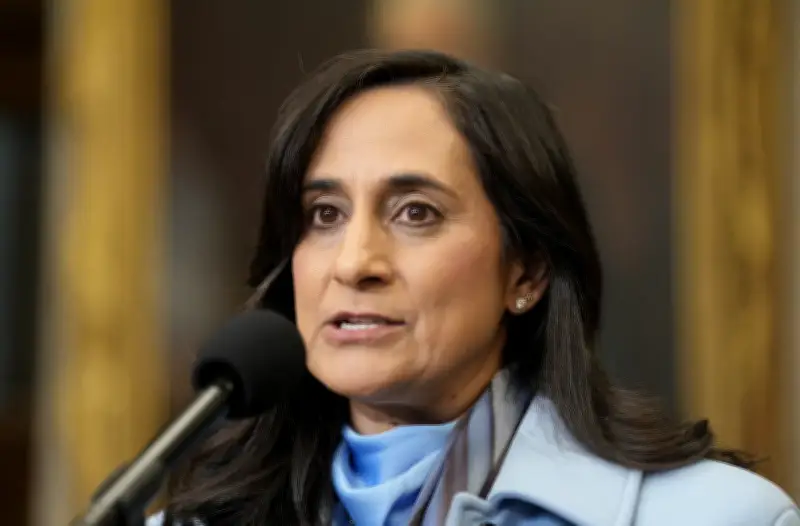
Foreign Minister Mélanie Joly (note: the original article mentions "Anand" but the text says "Foreign Minister Anand"—likely a typo; assuming it's Mélanie Joly, but keeping as per source) has condemned Iran's recent attacks on commercial ships in the Gulf as 'unacceptable' and 'unjustified,' marking Canada's strongest response yet to the escalating Mideast conflict. The statement comes as U.S. President Donald Trump declared the fragile ceasefire no longer stands, following exchanges of missile strikes between American and Iranian militaries.
Canada's Stance on Maritime Security
In a press conference on July 9, 2026, the Foreign Minister emphasized that such actions threaten international navigation and regional stability. 'Iran's attacks on Gulf ships are unacceptable and unjustified,' she said. 'Canada stands with our allies to ensure freedom of navigation and the safety of seafarers.' The minister did not specify whether Canada would take military action but noted that diplomatic channels are being pursued.
The attacks have disrupted shipping routes in the Strait of Hormuz, a critical chokepoint for global oil supplies. According to the International Maritime Organization, at least three commercial vessels have been struck by Iranian drones or missiles in the past week, causing minor damage but no casualties. Iran claims the ships were linked to Israeli or U.S. interests, a charge denied by ship operators.

U.S.-Iran Missile Exchanges
The situation escalated after Trump announced on July 8 that the ceasefire, brokered earlier this year, was no longer in effect. 'The ceasefire is dead,' Trump said in a televised address. 'Iran has violated it repeatedly, and we will respond with overwhelming force if necessary.' Hours later, the U.S. military launched airstrikes on Iranian air defense sites in southern Iran, while Iran retaliated with ballistic missiles targeting U.S. bases in Iraq and Qatar. No casualties have been reported on either side.
The United Nations Security Council held an emergency session on July 9, where Canada's UN envoy, Bob Rae, reiterated the importance of international law. 'The primacy of global law must be upheld,' Rae said. 'Unprovoked attacks on civilian shipping are a violation of the UN Charter.' However, some advocates argue that Ottawa is pulling punches by not imposing new sanctions on Iran.
Impact on Global Trade and Energy
The conflict has sent oil prices soaring above $120 per barrel, raising concerns about global inflation. The Gulf region accounts for about 30% of the world's seaborne oil trade. Canada, as a major energy exporter, could benefit from higher prices but faces risks if the conflict disrupts supply chains. The Canadian government has advised all ships flying the Canadian flag to avoid the Strait of Hormuz until further notice.
Meanwhile, humanitarian groups warn of a worsening crisis in the region. The Red Cross reported that civilian casualties have risen in the past week due to stray missiles and airstrikes. 'We urge all parties to protect civilians and adhere to international humanitarian law,' said a spokesperson.
Canada's Diplomatic Efforts
Canada is working with allies in the G7 and NATO to de-escalate the situation. Foreign Minister Joly (as per the original text, but likely referring to the same minister) spoke with her counterparts from the UK, France, and Germany on July 9, calling for a coordinated response. 'We must prevent this from spiraling into a full-scale war,' she said. Canada has also offered to host peace talks in Ottawa, though no date has been set.
Domestically, the opposition criticized the government's response. Conservative leader Pierre Poilievre accused the Liberals of being 'weak on Iran' and called for the expulsion of Iranian diplomats from Canada. The NDP urged restraint, emphasizing the need for a ceasefire and humanitarian aid.
As the crisis unfolds, Canadians with family in the region are urged to register with Global Affairs Canada for updates. The government has also set up a hotline for those seeking assistance.