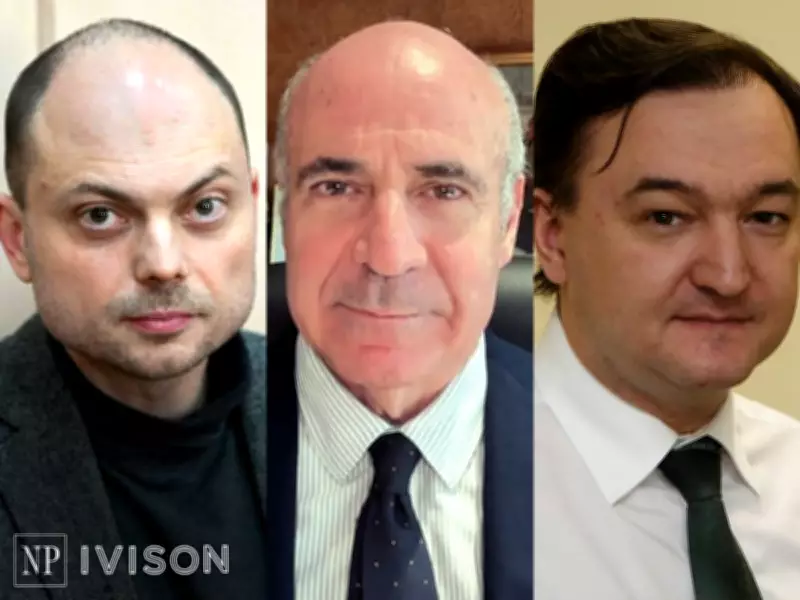
Bill Browder once described himself as the least likely MBA student at Stanford Business School in the late 1980s to become a human rights activist. In the early 2000s, he was the largest foreign investor in Russia through his Hermitage Fund, amassing significant wealth. However, his life took a dramatic turn in 2009 following the murder of his employee, Sergei Magnitsky, in custody after exposing a corruption scandal that reached the highest levels of Russian society.
The Turning Point
Magnitsky was arrested, tortured, and killed after 358 days in detention at the age of 37. This tragedy fundamentally altered Browder's path. "That changed my life completely, and I gave up my life as a businessman. I've spent the last 17 years on a mission to get justice for Sergei and for other victims of authoritarian regimes," Browder told the Post's John Ivison.
His crusade is detailed in his best-selling true-life thrillers, Red Notice and Freezing Order. With support from political allies such as the late U.S. Senator John McCain and former Canadian Justice Minister Irwin Cotler, Browder championed the introduction of Magnitsky legislation, which freezes assets and bans travel of human rights violators and kleptocrats worldwide. Canada was the second country to adopt such legislation, which is now law in 35 countries. "It's effectively the new norm in the world of human rights for righting wrongs and correcting injustices," Browder said.

Canada's Magnitsky Act: A Need for Reform
Canada's Magnitsky Act was passed in 2017, but Browder recently appeared before the House of Commons foreign affairs committee to support a private member's bill by Conservative MP James Bezan that would amend and update the act. "We got the Magnitsky Act passed in November 2017. It was a big deal. I remember the night Parliament voted on it. At the time, Chrystia Freeland was foreign minister and a strong supporter, knowing Russia well from her time as Financial Times bureau chief," Browder recalled.
Shortly after the law passed, Freeland imposed the first sanctions list, targeting dozens involved in Magnitsky's murder and the killing of Saudi dissident Jamal Khashoggi. "It was truly remarkable, but then something very strange happened. Freeland became deputy prime minister and finance minister, and from that moment on, not a single person was ever sanctioned under the Magnitsky Act. People might scratch their heads, but what happened was that when the Magnitsky Act passed, Canada also updated a piece of legislation called the Special Economic Measures Act (SEMA). All future sanctions were done under SEMA, which made no sense. I've never gotten a straight answer for why they didn't want to use Magnitsky, but I think some in your foreign ministry didn't want to inflame Russia by using the name Magnitsky. James Bezan and I were both very frustrated by this," he said. "Canada wouldn't have human rights sanctions if it weren't for Magnitsky, if it weren't for his story."
Proposed Amendments
Bezan's proposal includes renaming SEMA to the Magnitsky Act, but Browder emphasized that the amendments go beyond nomenclature. "We've now had nine years of experience with this law, and there are many things we need to adjust and fix. Bad actors are trying to get around the legislation. One issue I'm most familiar with is that after the Magnitsky Act passed, the Russian government went on a vendetta. Putin had a personal vendetta against me, chasing me around the world with Interpol red notices, death threats, kidnapping threats, and extradition requests. This is called transnational repression. I'm not the only victim. Many who stand up to dictators find themselves targeted even after leaving their countries. One of the most important provisions in this new Magnitsky Act being debated is a new category that sanctions countries or officials exercising transnational repression," Browder explained.
He also highlighted the issue of sanctioned individuals' family members. "It got under my skin that people who were sanctioned couldn't travel, use the Canadian banking system, or buy Canadian real estate, but their wives and children could. Some are living large in Canada even if the main principal was sanctioned for horrific things. The new legislation would sanction family members."

Additionally, Browder stressed the need for accountability. "The Magnitsky Act, or SEMA using Magnitsky provisions, is a powerful tool, but many parliamentarians propose people for sanctions, and the government does nothing. This legislation requires the government to respond to parliamentary requests and report on the whole process, holding the government's feet to the fire in a more formal way."
A Glimmer of Optimism
When asked if he is pessimistic about human rights being sidelined by pragmatic power politics, Browder responded, "I tend not to look too pessimistically at anything. The world is complicated, but good things happen alongside bad. Viktor Orban in Hungary was hijacking European support for Ukraine, and I never understood how the Hungarian people allowed that after being occupied by the Soviets in 1956. But they didn't allow it—they kicked him out decisively and brought in someone who is bringing Hungary back into the European Union. All the blocking mechanisms that Hungary used to hijack support for Ukraine have disappeared. That's just one example of good things happening in a world where everyone thinks everything is bad."