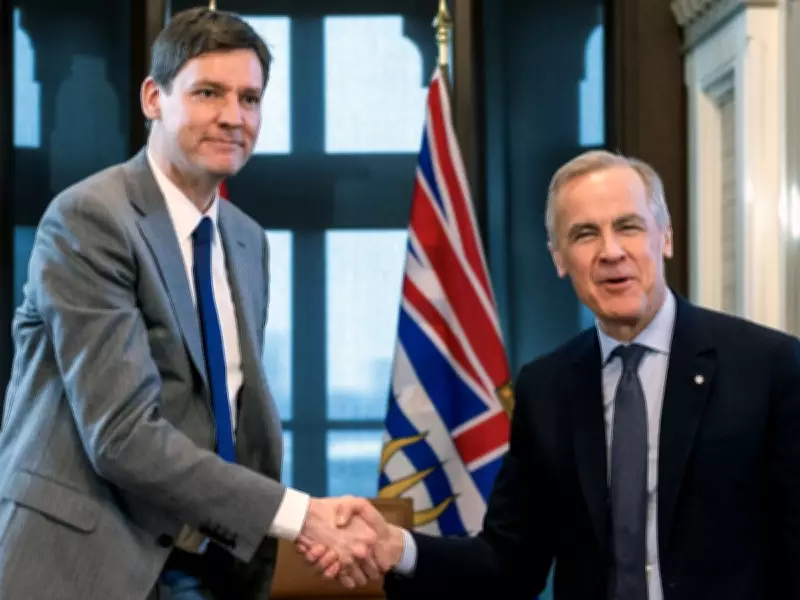
VICTORIA — Premier David Eby expressed optimism that Prime Minister Mark Carney's government shares British Columbia's position on a controversial court ruling regarding Aboriginal title on private land. The B.C. Supreme Court decision, issued last August, recognized Aboriginal title over private property in Richmond, sparking concerns among property owners and businesses.
Prime Minister's Stance on the Ruling
During a question period in Parliament last week, Prime Minister Carney responded to Richmond MP Parm Bains, stating that his government "fundamentally disagrees" with the B.C. Supreme Court's decision in the Cowichan Tribes case. Carney emphasized that the federal government immediately appealed the ruling alongside the Province of B.C., the City of Richmond, and other First Nations. He assured that federal agreements, including those related to Aboriginal title, have always protected and will continue to protect private property.
Carney's remarks marked his first public comment on the matter, according to observers. The prime minister's response was seen as a coordinated effort to address concerns over the implications of Justice Barbara Young's extensive 900-page decision.

Provincial and Federal Cooperation
Premier Eby welcomed the federal government's alignment with B.C.'s position. "I am hopeful certainly that we are on the same page as the prime minister on the matter of private property," Eby told reporters on Monday. He noted that the two governments are already cooperating to defend private property rights and clarify the decision's impact.
Eby has requested collaborative steps between Ottawa and the provincial government to provide assurance and support for protecting private property in B.C. and across Canada. This partnership aims to address the legal and practical consequences of the ruling.
Legal Challenges and Private Property Owners
The federal and provincial governments are jointly supporting an application to reopen the Cowichan case, filed by Montrose Holdings, a major property owner affected by the Aboriginal title designation. Montrose argues that it was excluded from the original proceedings and only learned of the impact on its property when the decision was released last August.
B.C.'s legal position supports Montrose's request, stating that "the orders sought by Montrose should be granted so that Montrose can speak with its own voice regarding the consequences a declaration of Aboriginal title has had on its fee-simple title and business activities." The province emphasizes that the court should hear directly from private landowners affected by such declarations.
Next Steps in the Legal Process
The next court hearing is expected soon, as both governments work to overturn or clarify the ruling. The case has significant implications for property rights, reconciliation, and the balance between Indigenous title and private ownership in British Columbia.