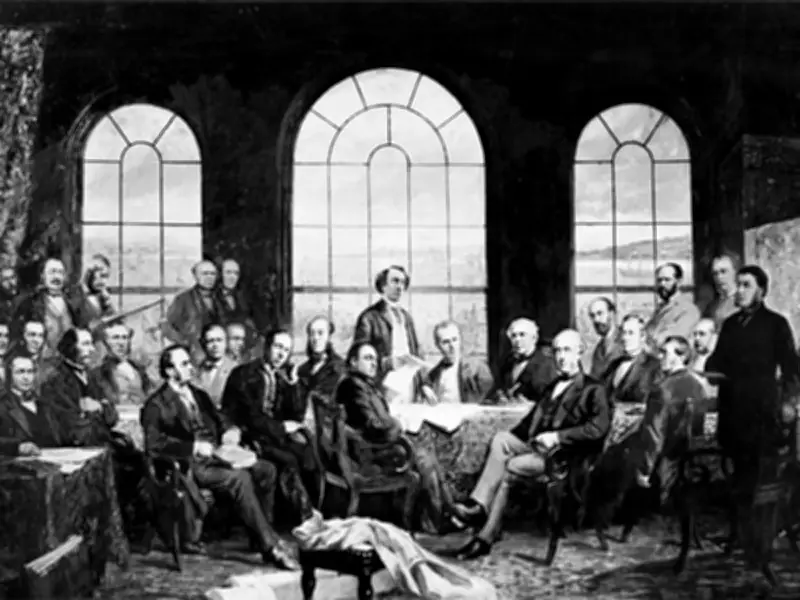
It is impossible to know exactly what the original designers of Confederation envisioned when Alberta and Saskatchewan became provinces in 1905. But Clifford Sifton, Laurier's Minister of the Interior, left a brutally clear blueprint: “We desire, and all Canadian Patriots desire, that the great trade of the prairies shall go to enrich our people to the East, to build up our factories and our places of work, and in every legitimate way to our prosperity.”
Sifton's formula worked — for a time. The Prairies fed Eastern industry, built the country, and kept the cheques flowing east. But that old Canada is broken. The machinery is grinding, trust has evaporated, and Alberta is tired of playing the reliable cash cow that gets kicked for producing milk.
A New Direction for the Referendum
Late last week, Alberta Premier Danielle Smith yanked the wheel: no binding separation referendum this October. Instead, Albertans get a clear either/or question on October 19: Should Alberta remain a province of Canada, or should the government begin the constitutional process toward one? Smith says she'll campaign to stay — but she'll respect the verdict.

The reaction was pure Alberta opera: ranting, screaming, character assassinations, and enough virtue-signalling to power a wind turbine for a decade. Separatists, federalists, and status-quo warriors all claim to speak for “ordinary Albertans.” Good luck nailing jelly to the wall. At least a third of the province hasn't spoken. We're guessing in a fog of unknown unknowns.
Beyond the Drama
For drama fans, the script writes itself: Canada: Designed to Fail. A creaking Westminster system in its death spiral. “Who Killed My Canada?” — starring B.C.'s David Eby dodging his own UNDRIP bullet, Prime Minister Mark Carney as the wise elder, and Danielle Smith as Captain Canada gently removing the knife from Ottawa's throat.
Humour helps. So does honesty. Can we at least agree on the real questions? Is it possible to create the conditions for our kids to do better than we did? Can we rebuild a genuine meritocracy? Do we have the nerve to redesign Confederation for the crises we face — and the asteroid coming our way?
Economic Realities and Future Opportunities
Back to Sifton. In 2026, Alberta isn't the junior partner anymore — it's the new economic engine, more like Ontario in its heyday. It makes hard-headed business sense to pipe Alberta oil to U.S. Gulf Coast refineries and help fuel America's energy superpower resurgence. Those old enough to remember the Chevrolet jingle — “See the U.S.A. in Your Chevrolet” — will recall a confident era when Ontario hitched its wagon to Detroit's boom via the Auto Pact. Today, some in the chattering class casually muse about winding down the auto sector. Seriously?
It's also smart business to look beyond our borders. Parochial grievances won't cut it when CUSMA negotiations loom, when wars reshape energy markets, and when leaders like Trump, Modi, Xi, and Putin play raw pragmatism. Tech giants are frustrated with Canada; Elon Musk patched things up with Trump in Beijing. Grievances are luxuries the world no longer indulges.
This referendum forces the conversation Ottawa has long avoided: Can Confederation evolve through mutual respect, or will it fracture? Alberta's vote is not about rage-quitting Canada — it is about renewing Confederation.