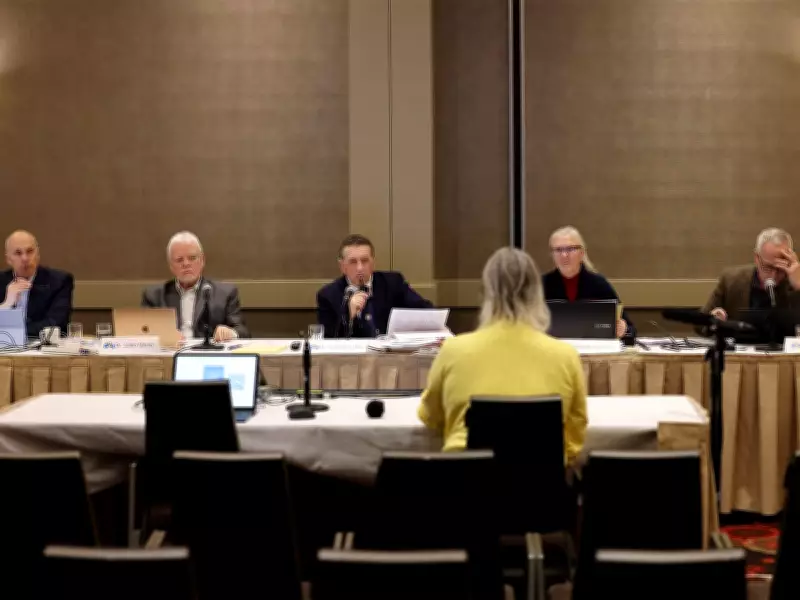
The judge's comments were not a mistake, exactly, and certainly not partisan or ill-intended. But Dallas Miller's addition to a long report sent Alberta's riding boundaries straight into the political realm, touching off a countrywide controversy.
UCP Accused of Violating Long-Standing Practice
The United Conservative Party (UCP) is being blasted for violating long-standing practice by quickly passing a law to increase the number of ridings. They also set up a legislature committee to decide on boundaries, a move that has drawn sharp criticism.
Majority maps from boundary commissions are usually accepted by governments. That is why, when the UCP acted swiftly, the lid blew off the issue. The government fixed on one section of Miller's late addendum to the majority report, using his words as justification.

The Judge's Addendum
Miller, a judge, suggested the government do exactly what is happening now. He advised legislating 91 ridings, an increase of four, if the legislature (meaning the UCP majority) could not accept the 89 recommended by the panel majority. He wrote: “The majority of the commission recommends that the assembly make amendments to the Electoral Divisions Act, increasing the number of electoral divisions from 89 to 91 for the next general election, and restore the two electoral divisions that this commission has removed.”
The government set the stage for 91 ridings at light speed. Greg Clark, the former MLA and Alberta Party Leader appointed by the NDP, took angry exception. He said it was a “misprint” to state that the majority agreed with Miller. Rather, the original majority report should have been adopted automatically, as usually happens.
Miller's Clarification
Wording aside, the judge did not abandon the majority report. Miller said: “Lest there be any confusion about this issue, my writing this addendum in no way detracts from the majority report representing the view of a majority of the commission. The rest of the province, as we propose, must be maintained to the extent possible.” Then came the key comment: “This would need to be studied by an all-party select special committee.”
The government snapped like a hungry piranha at the prospect of the legislature having power over riding maps. They quickly moved to create the legislature committee and also an advisory body with the same structure as the commission — two members from each party and a distinguished chair, such as a judge or university president. That panel will not hold hearings, while Miller's commission presided over many.
Political Fallout
The controversy has sparked debate about the independence of electoral boundary commissions and the role of partisan politics in redistricting. Critics argue that the UCP's actions undermine democratic processes, while supporters claim the legislature has the ultimate authority to determine riding boundaries. The issue remains a flashpoint in Alberta politics.