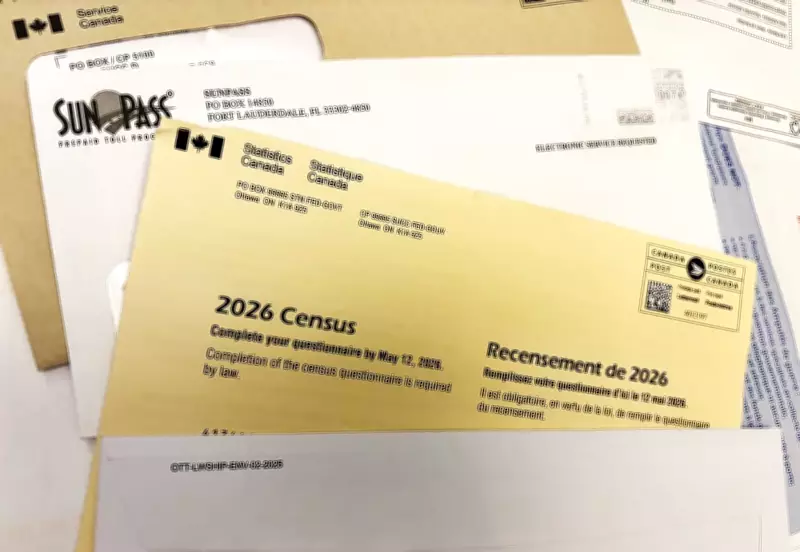
OTTAWA — Keep an eye on your mailboxes. If you haven't received one already, Canadians can expect to get yellow 2026 Census forms in their mail in the coming weeks as the government commences its latest effort to tabulate the country's population.
The population census is a legally-bound process designed to create a snapshot of the demographic, social, and economic information from every household in Canada.
"With your help, results from the 2026 Census of Population will allow us to accurately reflect Canadian society," chief statistician Andrew Loranger said in a news release. "This data will provide invaluable insights to all levels of government, as well as Canadian businesses and non-government organizations. It will ensure that they have access to the up-to-date information they need to plan critical services and programs such as employment, education, child care, health care and so much more."

Online Collection and Multilingual Access
Within the yellow envelopes is a secure 16-digit code and a link to the Census 2026 website. Information this year will primarily be collected online and is available in 28 languages and alternate formats. Those who do not fill out the information will be contacted by Statistics Canada workers to assist with data collection.
By law, a census must be conducted every five years, and the government assures that all information collected will be kept confidential.
Legal Obligations and Penalties
Yellow envelopes began being dispatched to every address in Canada on Monday. Under the Statistics Act, every household is legally obligated to participate. Refusal to provide information—or knowingly providing false information—can result in fines of up to $500, while wilfully obstructing a census employee can lead to fines of up to $1,000. As of 2017, Canadians who violate the census law are no longer subject to imprisonment.
Additional Census of Agriculture
Statistics Canada is also collecting information on Canada's farming and food production industries via the Census of Agriculture, which aims to gather data on nearly every agricultural operation in Canada.
"Together, they paint a complete portrait of Canada's population and agriculture sector, providing high-quality information that helps Canadians make important decisions that affect their families, their communities and their businesses," Statistics Canada said.