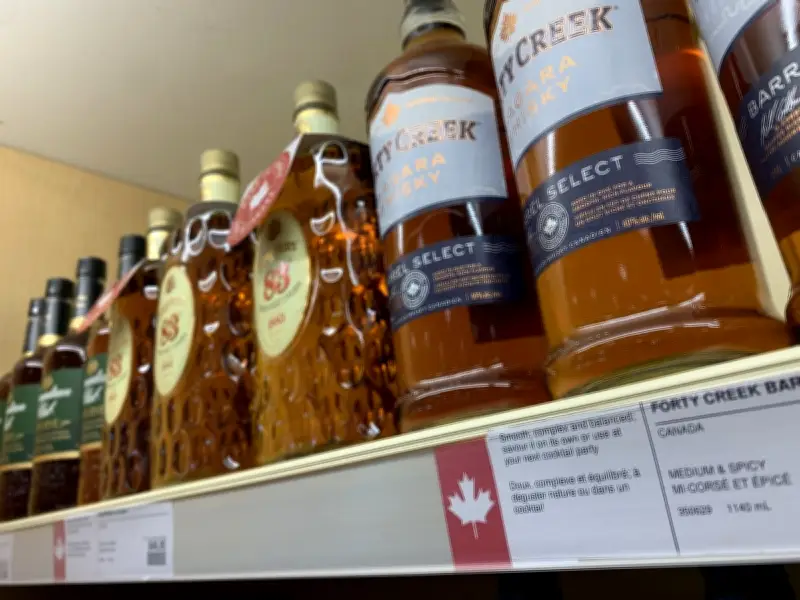
U.S. Congress Targets Provincial Alcohol Bans
The introduction of the CANADA Act in the U.S. Congress this week marks a significant escalation in the trade dispute over provincial alcohol bans. The proposed legislation would require the U.S. Trade Representative to investigate provinces that continue to exclude American alcoholic beverages from their distribution systems. Should the investigation conclude that these measures constitute discriminatory trade practices, Washington could consider retaliatory action.
Canada's provincial liquor authorities are not ordinary retailers; they are government-controlled monopolies that regulate access to the marketplace. When these entities deliberately remove products from a particular country, it becomes increasingly difficult to argue that the decision is purely commercial. From the perspective of many American stakeholders, this is a government intervention that may conflict with the spirit—if not the letter—of existing trade agreements.
Quebec's SAQ Faces $27 Million Loss
Quebec provides a telling example of the economic costs. The removal of American products imposed significant costs on the SAQ. More than one million bottles were pulled from store shelves and placed into storage, tying up inventory valued at over $27 million. Warehousing costs quickly climbed into the hundreds of thousands of dollars. Facing the risk that some products would deteriorate over time, the Quebec government ultimately authorized the liquidation of part of the inventory, recovering up to $8.6 million, with the proceeds directed to Quebec food banks. While the decision was pragmatic, it also underscored that the boycott carried real economic costs.

American producers, meanwhile, argue they have suffered substantial losses. U.S. spirits exports to Canada are estimated to have declined by more than 80 percent since the provincial measures were introduced. In several U.S. states, these losses are now translating into growing political pressure on elected officials, who are demanding a response from Washington.
Trade Tensions Already High
The timing could hardly be more sensitive. Canada-U.S. trade relations are already strained by disputes over tariffs, steel and aluminum, and the upcoming review of the Canada-United States-Mexico Agreement (CUSMA). Opening another front involving provincial liquor monopolies will only add to existing tensions.
There is also a broader precedent worth considering. If governments use public monopolies to exclude foreign products for political reasons, other countries may feel justified in applying similar measures against Canadian exports. For a country whose prosperity depends heavily on international trade, that is a risky proposition.
Symbolic Actions Have Limited Lifespan
The boycott of American alcohol may have served a legitimate political purpose. But symbolic actions often have a limited lifespan, while their economic consequences can endure. What began as a commercial dispute is increasingly becoming a diplomatic one.
The introduction of the CANADA Act does not mean U.S. sanctions are imminent. It does, however, send a clear signal that Washington no longer views the removal of American products as merely a provincial political gesture, but as a trade practice that could warrant a federal response.
Canada Should Reduce Friction
Given the current CUSMA review, Canada would be well served by reducing sources of friction rather than creating new ones. Markets value predictability. So do trading partners.
Ultimately, the most effective way to express disagreement in a market economy may also be the simplest: let consumers decide. If Canadians wish to boycott American products, they are entirely free to do so. But when governments remove those products from store shelves, an individual consumer choice becomes an official state action—with all the commercial, diplomatic, and financial consequences that inevitably follow.
– Sylvain Charlebois is director of the Agri-Food Analytics Lab at Dalhousie University, co-host of The Food Professor Podcast.