Canadians should brace themselves for the likelihood of Mark Carney leading a Liberal majority government in the near future. This potential shift in power hinges on three critical byelections called by Carney on Sunday, set to take place in two Toronto ridings and one in the Montreal area. If the Liberals sweep all three contests, they will achieve majority control in the House of Commons, fundamentally altering the political landscape.
Advantages Favoring Liberal Sweep in Byelections
The Liberals are well-positioned to win these byelections due to several key advantages that their opponents lack. In the Toronto ridings, historical voting patterns strongly favor the party. Scarborough Southwest has been a Liberal stronghold, with the party winning in all but two elections since 1980, and in recent years, they have consistently garnered over 50% of the vote. Similarly, University–Rosedale saw Chrystia Freeland secure a decisive victory last April with 64% of the vote, indicating a high probability of the Liberals retaining this seat.
Terrebonne Riding: The Crucial Battleground
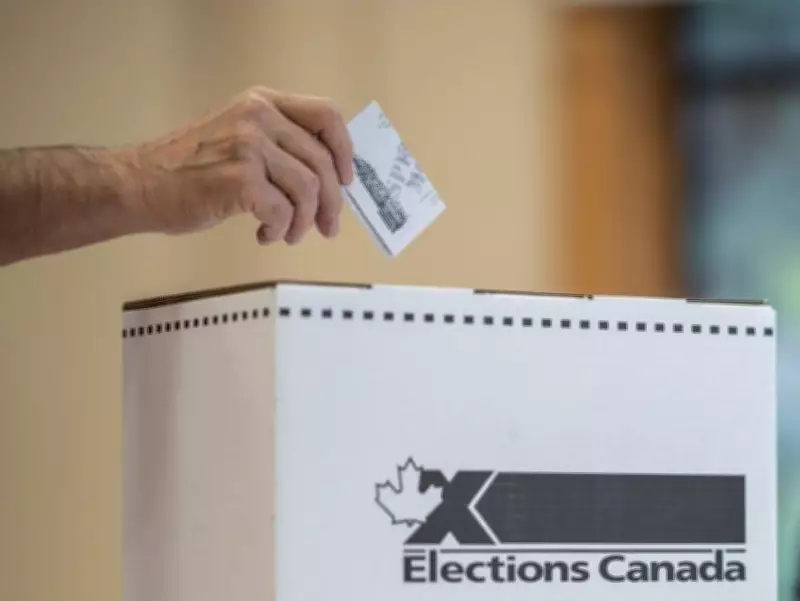
The Terrebonne riding, located just north of Montreal, presents a more challenging scenario for the Liberals, but they remain the likely victors. This seat was previously won by Liberal candidate Tatiana Auguste by a single vote over Bloc Quebecois candidate Nathalie Sinclair-Desgagne. A controversy arose when a voter claimed her mail-in ballot was returned due to an incorrect address printed by Elections Canada, leading to a Supreme Court-ordered new election last month.

Despite the Bloc Quebecois's determination to reclaim this historically held riding, the Liberals are motivated to secure a majority government. They benefit from superior financial resources and a larger volunteer base, which will be crucial in the upcoming campaign.
Strategic Campaigning and Financial Edge
The byelection is scheduled for April 13, shortly after thousands of Liberals gather in Montreal for their party convention. Many delegates are expected to engage in door-knocking and campaigning for Auguste, potentially boosting voter turnout through advance voting and election day efforts.
Financially, the Liberals hold a significant advantage. In byelections, each candidate and party operates under spending caps. For instance, in a recent Alberta byelection, the candidate limit was $163,276, and the party limit was $110,147. However, party spending is considered on a national scale. Since the Liberals are fielding candidates in all three ridings, while the Bloc is only contesting one, the Liberals can concentrate nearly all of their allowable national spending—estimated at around $330,000—on the Terrebonne race. In contrast, the Bloc is limited to approximately $110,000, as noted by political strategist Fred Delorey.
Potential Obstacles and Market Predictions
Money alone does not guarantee victory, and the Terrebonne riding could still prevent a Liberal majority. Voters from other parties, such as Conservatives or the NDP, might rally behind the Bloc to block Liberal control, or they may simply abstain from voting, a common trend in byelections.
Despite these uncertainties, prediction markets reflect confidence in a Liberal win. On Polymarket, a cryptocurrency-based platform, the probability of Carney achieving a majority by June 30 has surged from 18% to 71% in recent weeks. This indicates a strong belief among bettors that the Liberals will prevail on April 13, potentially securing a slim but decisive majority.
As the byelections approach, all eyes will be on these key ridings, where the outcome could reshape Canadian governance and solidify Carney's leadership in Parliament.